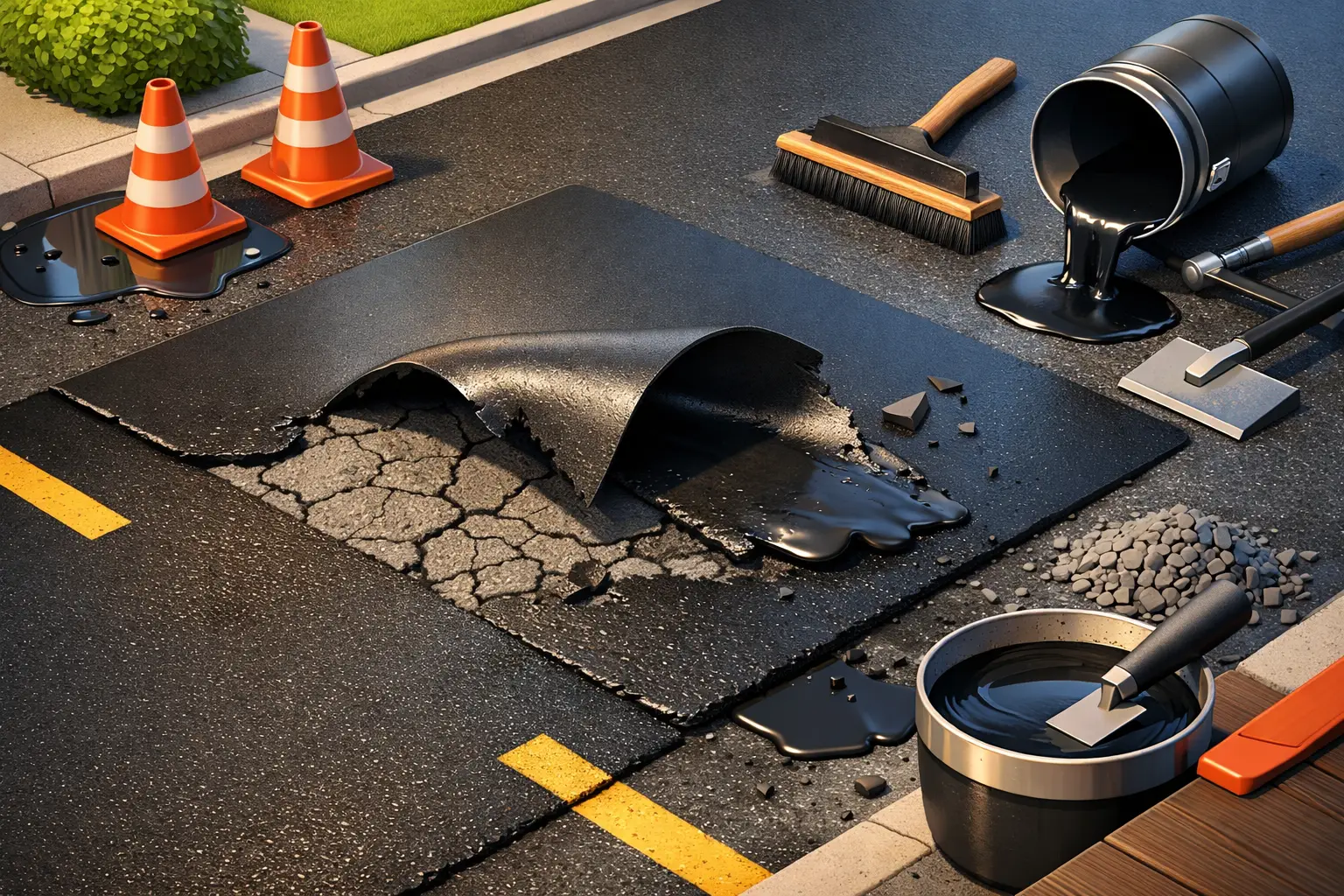
A newly sealed driveway should dry to an even, dark finish that protects the asphalt underneath. When black flakes start lifting off in strips or patches, it is frustrating, especially if the job was completed recently. So, why does sealcoat peel? In most cases, the coating did not properly bond to the asphalt because of surface contamination, moisture, poor preparation, unsuitable weather, or a problem with the material itself.
Peeling sealcoat is not always a sign that the entire driveway needs replacement. But it should not be ignored. The exposed areas lose protection from water, sun, oil, and everyday traffic, which can allow the asphalt to age faster. Finding the reason behind the failure is the first step toward making the right repair instead of applying another coat that peels again.
Why Does Sealcoat Peel From a Driveway?
Sealcoat is a protective surface coating, not a structural repair product. It has to grip clean, sound asphalt to do its job. If anything gets between the coating and the driveway, or if the surface moves too much because of damage below, adhesion can fail.
Sometimes peeling happens across a large portion of the driveway. Other times, it appears only where cars park, near the garage, along drainage paths, or over repaired areas. Where the peeling occurs often offers a useful clue about the cause.
Oil, Grease, and Vehicle Fluids
Oil spots are one of the most common reasons sealcoat lifts. Motor oil, transmission fluid, gasoline, and other automotive fluids soak into asphalt and leave behind a residue that sealcoat cannot reliably stick to. A driveway may look clean after a quick rinse, but a stain that was not properly treated can still interfere with bonding.
This is why the area where vehicles are usually parked may peel before the rest of the driveway. Dark, soft, or slick-looking patches are especially likely to cause trouble. Those spots need to be cleaned thoroughly and, in some cases, primed or repaired before sealing.
Moisture Under or on the Surface
Sealcoat and water do not work well together during application or curing. Rain shortly after sealing can weaken the finish, but moisture can also come from morning dew, damp shaded areas, or water rising through cracks in the asphalt.
On Long Island, weather can change quickly, and driveway conditions are not always obvious from the street. A surface may seem dry while cracks, low spots, or shaded sections still hold moisture. If water is trapped below the coating, the sealcoat can blister, loosen, and eventually peel away.
Poor drainage makes this issue worse. If water repeatedly pools near the garage, at the end of a driveway, or along a low edge, sealing alone will not solve the underlying problem. The drainage issue or damaged asphalt needs attention first.
The Asphalt Was Not Properly Cleaned
Before sealcoating, the driveway needs more than a casual sweep. Dirt, sand, leaves, grass clippings, loose stones, chalky old coating, and construction dust can all prevent a good bond. The surface should be cleaned, edges should be trimmed, and loose material should be removed from cracks and damaged areas.
Preparation takes time, but it is what separates a finish that looks good for a few weeks from one that holds up through regular use. A coating applied over dust or loose old sealer is essentially attached to that debris, not to the driveway itself.
Sealing Over Failing Asphalt or Old Loose Coating
Sealcoat cannot stabilize asphalt that is crumbling, badly cracked, soft, or breaking apart. It can improve appearance and slow surface aging, but it cannot rebuild a weak driveway. If the asphalt underneath is deteriorating, the coating may peel as the surface shifts or breaks down.
The same is true of old sealcoat that is already flaking. Applying fresh material over loose coating can create a temporary dark appearance, but the new layer often comes off with the old one. The failed areas should be removed and the surface evaluated before resealing.
This is one reason a professional inspection matters. A driveway with a few isolated surface issues may be a good candidate for cleaning, crack repair, and sealcoating. A driveway with widespread alligator cracking, deep potholes, or a weak base may need more substantial repair or replacement. The most affordable solution is not always the lowest upfront price if it does not address the cause of the damage.
Weather and Timing Can Cause Peeling Sealcoat
Sealcoat needs the right conditions to dry and cure. Cool temperatures, high humidity, rain, heavy dew, and insufficient sunlight can all slow down that process. If the coating is exposed to water or traffic before it has cured, it may scuff, track, soften, or peel.
Very hot weather creates a different concern. Asphalt can become extremely hot in direct sun, and applying sealcoat under the wrong conditions may cause the material to dry unevenly or too quickly at the surface. Wind can also blow dust and debris onto fresh coating.
A dependable contractor watches the forecast, checks the driveway itself, and is willing to reschedule when conditions are not right. That can feel inconvenient, but it is better than rushing a job and leaving a customer with a finish that fails early.
New asphalt needs time to cure before it is sealed as well. Freshly installed pavement contains oils that must oxidize and settle. Sealing too soon can keep the coating from adhering properly. The appropriate waiting period depends on the asphalt mix, weather, traffic, and site conditions, so it is worth asking your paving contractor for a recommendation rather than choosing a date based on appearance alone.
Material and Application Problems
Not every peeling problem comes from the driveway. Sealcoat must be properly mixed and applied at an appropriate coverage rate. A coat that is too thick can take longer to cure and may become more likely to crack or lift. A coat that is too thin may wear out quickly and provide uneven protection.
The product also needs to be suitable for the surface and applied according to manufacturer directions. Adding too much water, using poorly stored material, or applying a coating past its usable condition can lead to inconsistent results. These details may sound technical, but they affect whether the job lasts.
Traffic can make a weak application fail faster. Turning tires while the vehicle is stopped, parking heavy trucks in one place, dragging equipment, or placing sharp kickstands on a freshly coated surface can pull at the finish. Tire marks are not always peeling, but actual lifted flakes or bare asphalt are signs that the bond needs closer attention.
What to Do When Your Sealcoat Is Peeling
Start by looking at the size and pattern of the damage. A few small spots near oil stains or a drainage area may be repaired locally after the cause is corrected. Widespread peeling usually calls for a more careful assessment before any new coating is applied.
Do not simply coat over peeling sections. Loose material should be removed, the surface should be cleaned, and any cracks, soft spots, potholes, or drainage concerns should be addressed. If the problem is limited to a failed top layer, the driveway may be able to be prepared and resealed successfully. If the asphalt itself is breaking down, patching or replacement may be the more practical choice.
It also helps to document when the driveway was sealed, how long it took before peeling appeared, recent weather conditions, and where vehicles are parked. That information can help identify whether the likely cause was moisture, fluids, traffic, surface failure, or application timing.
How to Prevent Sealcoat From Peeling Again
The best prevention starts before the sealcoat is applied. Keep oil leaks under control, clean spills promptly, and avoid waiting until cracks and potholes have spread across the driveway. Good drainage matters just as much as a dark finish, because standing water works its way into asphalt and shortens its service life.
When it is time to seal, choose a contractor who takes preparation seriously. The crew should inspect the asphalt, clean the surface, discuss needed repairs, and apply the coating in weather that supports proper curing. You should also receive clear instructions on when you can walk, park, and place heavy items on the driveway again.
For homeowners, landlords, and property managers, sealcoating is a smart maintenance step when the pavement is in suitable condition. It is not a cover-up for structural damage. A straightforward evaluation can save money by matching the repair to the actual problem, whether that means spot treatment, crack repair, resurfacing, or a fresh coat applied the right way.
If your driveway is peeling, the goal is not just to make it black again. The goal is to correct what caused the coating to fail so the next repair protects your asphalt, looks clean, and holds up to daily use.