
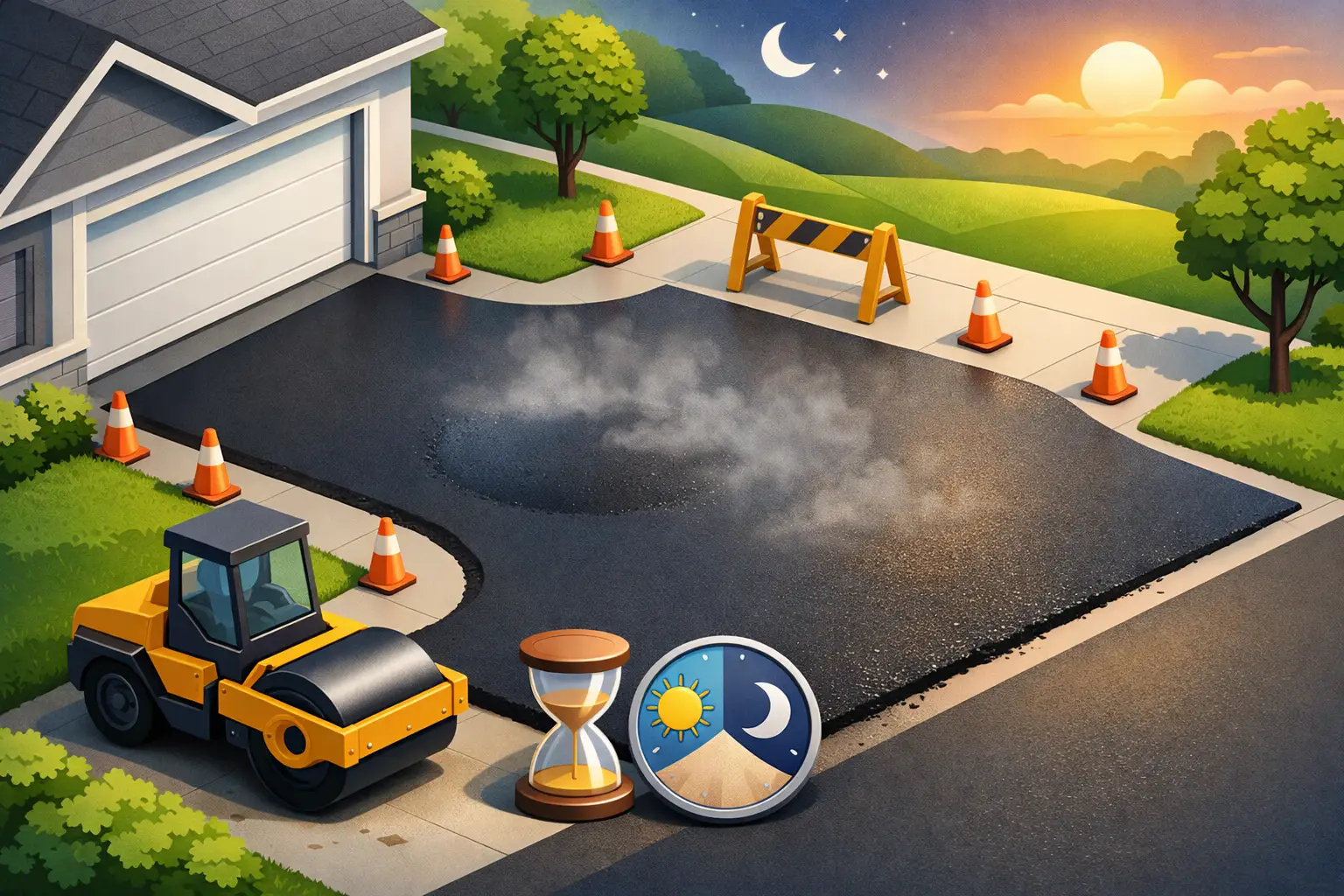
A newly paved driveway can look finished by the time the crew leaves, but the asphalt underneath is still changing. So, how long does driveway asphalt take to cure? Most new asphalt needs roughly 6 to 12 months to fully cure and harden. That does not mean you have to leave your car on the street for a year. It means the surface needs a little care while it gains strength.
For most Long Island driveways, you can usually walk on fresh asphalt after about 24 hours and drive on it after 2 to 3 days, depending on the weather, driveway thickness, and the type of vehicles using it. The first few weeks matter most. A little patience now can help prevent marks, dips, and costly repairs later.
How Long Does Driveway Asphalt Take to Cure in Practice?
Asphalt does not cure in the same way concrete does. Concrete hardens through a chemical process. Asphalt starts firm as it cools, then gradually becomes more stable as oils within the mix oxidize and the pavement settles into normal use.
There are two timelines homeowners should keep straight. The first is the initial cooling period, when the driveway becomes safe for light use. The second is the longer curing period, when the asphalt becomes tougher and better able to handle heat, turning tires, and heavy loads.
Under normal conditions, a new driveway is generally ready for foot traffic within 24 hours. Most passenger vehicles can use it after 48 to 72 hours. If the paving was completed during very hot weather, it is wise to wait longer if possible. Heat keeps asphalt softer, especially during the first several days.
Full curing typically takes 6 to 12 months. During that time, the driveway will slowly change from deep black to a lighter charcoal gray. That color change is normal. It is a visible sign that the surface is aging and hardening.
Weather Has a Major Effect on Cure Time
The calendar gives a general answer, but weather often decides the real schedule. Asphalt needs dry conditions and enough warmth during installation to be compacted properly. After paving, temperature and sunlight affect how quickly the surface firms up.
A mild, dry day gives a new driveway the best start. On a cooler day, asphalt may firm up quickly on top but still need time before regular vehicle traffic. During a hot summer stretch, the opposite can happen. The surface may remain soft enough for tire marks, kickstands, or furniture legs even after the usual waiting period.
Rain shortly after paving is not automatically a disaster. Once asphalt has been properly compacted, a normal rainstorm generally will not ruin it. Still, standing water and poor drainage can cause problems over time. Water should move away from the driveway rather than pool along the edges or near the garage.
If a contractor recommends waiting an extra day before parking, that is usually a practical call based on the conditions at your property, not unnecessary delay.
When Can You Walk, Park, and Drive on New Asphalt?
For a typical residential driveway, these guidelines are a good starting point:
- Walk on the surface after about 24 hours.
- Drive a standard car, SUV, or light pickup on it after 2 to 3 days.
- Avoid heavy moving trucks, dumpsters, delivery vehicles, and construction equipment for at least several weeks when possible.
- Wait 6 to 12 months before applying sealcoat to brand-new asphalt.
A driveway that is shaded, thickly paved, or installed during cool weather may need extra time before vehicle traffic. On the other hand, a driveway installed in high summer can feel firm at first but soften again during hot afternoons. In either case, careful use is the better choice.
If you need to move in, schedule a delivery, or have work trucks coming to the property, mention that before the paving job begins. A dependable paving contractor can help plan around the traffic your driveway needs to handle.
What to Avoid While New Asphalt Cures
New asphalt is most vulnerable to concentrated pressure and sharp movements. Parking in exactly the same spot every day can leave depressions over time, particularly during hot weather. For the first few months, move vehicles around when you can instead of placing the tires in the same position.
Avoid turning the steering wheel while the vehicle is stopped. This is called dry steering, and it can twist the surface and leave scuff marks or small grooves. Pull in, straighten the car as you move, and avoid quick, tight turns whenever possible.
Motorcycle kickstands, trailer jacks, ladders, and patio furniture with narrow feet can also press into warm asphalt. Place a sturdy piece of plywood beneath concentrated weight if you need to use these items on the driveway. The same goes for dumpsters or portable storage containers. They should be placed only after discussing the timing and protection needed.
Be especially careful with gasoline, motor oil, transmission fluid, and other vehicle leaks. Petroleum products can soften asphalt and break down the binder that holds it together. Clean spills promptly with an absorbent material, then use an appropriate cleaner without aggressively scrubbing the surface.
Why You Should Not Sealcoat Too Soon
Fresh asphalt needs time to release oils and cure before sealcoating. Applying a protective coating too early can trap those oils and keep the pavement from hardening as it should. It may also lead to poor adhesion, peeling, or an uneven finish.
For most new driveways, waiting at least 6 months is a reasonable minimum. Many paving professionals recommend closer to 9 to 12 months, especially if the driveway was installed late in the season or has not had much time in warm, dry weather. The right timing depends on the mix, weather, and condition of the surface.
Once the driveway has cured, sealcoating can help protect it from sun exposure, water, salt, and everyday wear. It is maintenance, not a repair for major cracks or base failure. Any damaged areas should be addressed before a sealcoat is applied.
Signs Your Driveway Is Still Soft
You do not need special equipment to tell whether new asphalt needs gentler treatment. Look for tire impressions, heel marks, scuffs from turning tires, or indentations where a vehicle has been sitting. A slight mark after a very hot day can happen, but repeated or deep impressions are a sign to reduce traffic and avoid heavy weight.
The edges deserve extra attention. Asphalt edges do not have the same support as the center of the driveway, so they can crack or break if vehicles drive too close to them. Keep tires a few inches away from the edge, and do not park partly on the asphalt and partly on soil or grass.
If you notice a low spot, cracking, or water that does not drain, contact your paving contractor instead of assuming it will disappear as the driveway cures. Some small surface changes are normal, but drainage and structural concerns are best handled early.
Protecting a New Driveway Through Its First Year
The best care routine is simple. Keep the driveway clean, handle fluid leaks quickly, and avoid heavy loads during the early curing period. Sweep away leaves and debris so moisture does not sit on the surface. During winter, use a plastic shovel rather than a metal edge when clearing snow, and avoid chipping aggressively at ice.
For commercial properties and managed buildings, it helps to let tenants, employees, and delivery drivers know when the area was paved. A temporary notice can prevent a heavy truck from entering too soon or a vehicle from sitting in one place all day. This small step protects the investment and avoids an unnecessary service call.
A properly installed asphalt driveway is built to serve your property for years, but its early care affects how it looks and performs. If you are planning a driveway project in Suffolk or Nassau County, Big Apple Paving and Remodeling can provide a straightforward free estimate and explain what your property will need after paving. Give the new surface the time it needs, use it carefully at the start, and it will be ready for the daily traffic your home or business depends on.