
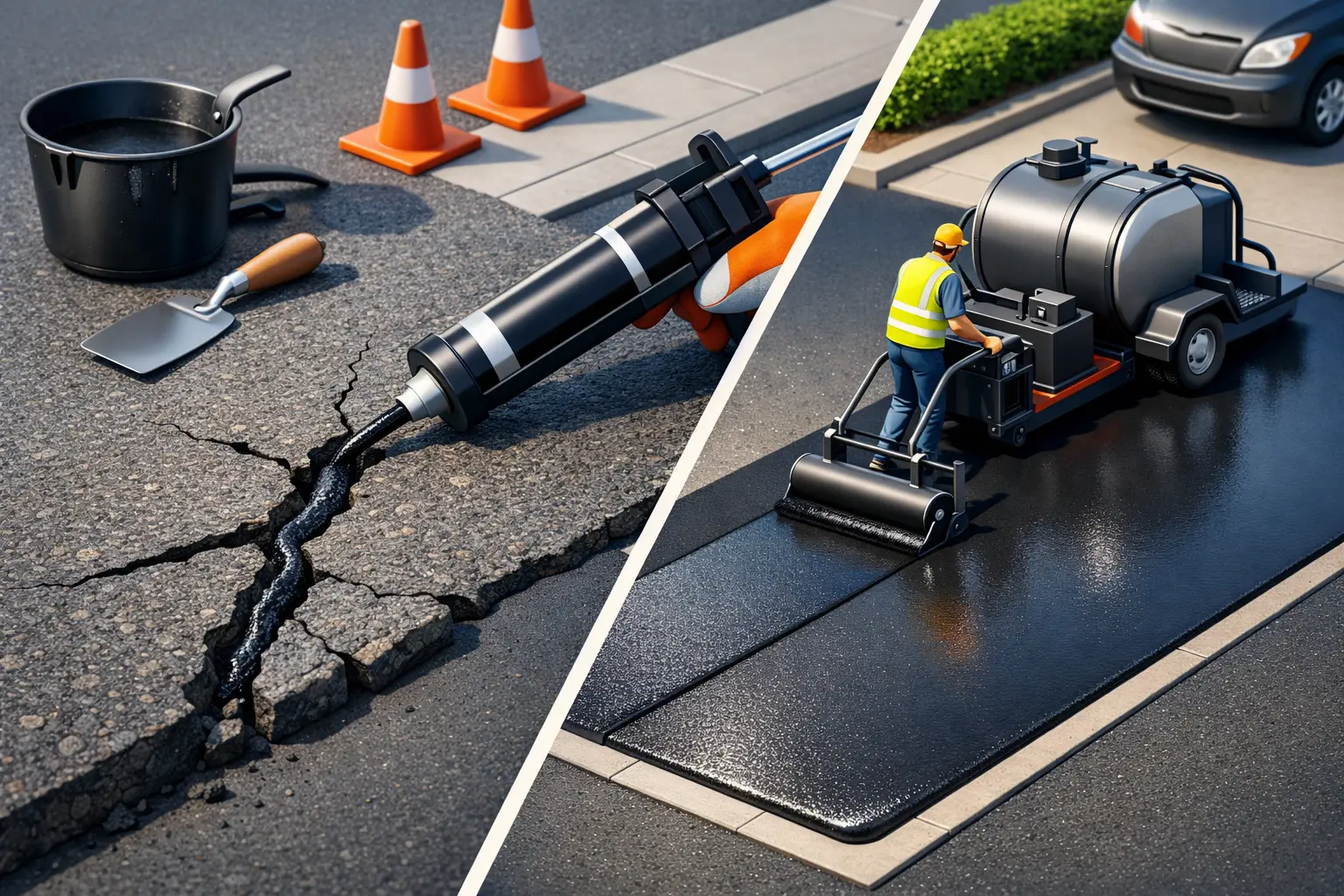
A driveway can look ready for a fresh black finish and still have a problem hiding in plain sight. Asphalt crack repair before sealcoating is what keeps a routine maintenance job from becoming a short-lived cosmetic fix. If cracks are left open, water can move beneath the surface, weaken the base, and turn a small repair into a larger paving expense.
For Long Island homeowners, landlords, and property managers, the order of work matters. Sealcoating protects sound asphalt from sun, moisture, oil, and daily traffic. It does not rebuild damaged pavement or permanently close active cracks on its own. Repairing the cracks first gives the sealcoat a solid surface to protect.
What Happens When Cracks Are Sealed Over
Sealcoat is a protective coating, not a structural repair material. When it is brushed or sprayed over an open crack, it may darken the area and make the pavement look better for a short time. But the coating is thin. As the asphalt expands and contracts through changing temperatures, the crack can reopen through the sealcoat.
More importantly, water does not need a large opening to cause trouble. Rain, snowmelt, and runoff can enter narrow cracks, reach the stone base below, and soften the support under the driveway or parking area. During freezing weather, trapped water expands. That movement can widen cracks, loosen pavement, and eventually contribute to potholes or sinking sections.
Skipping repairs may save time on the day of sealing, but it often costs more later. A driveway with a stable base and repaired cracks is much easier and more affordable to maintain than one that has begun breaking apart from below.
Asphalt Crack Repair Before Sealcoating: The Right Process
Good results start with preparation, not the final coat of sealer. The pavement should be evaluated first to determine whether the damage is limited to surface cracks or whether there are deeper issues that need a different repair.
Small cracks are typically cleaned to remove dirt, weeds, loose asphalt, and moisture. A proper crack filler or hot rubberized crack sealant is then applied, depending on the crack and the condition of the pavement. The material needs time to set before sealcoating begins. This helps it stay in place instead of mixing with or pulling through the new sealcoat.
Once repairs are complete, the entire surface is cleaned again. Oil spots should be treated, loose debris removed, and edges checked for crumbling asphalt. Only then is the sealcoat applied in even coats across the sound pavement.
The goal is straightforward: repair the openings where water gets in, then protect the larger surface from the wear that causes future damage.
Not Every Crack Needs the Same Fix
Hairline cracks, wider gaps, and areas with crumbling edges should not all be handled exactly the same way. A narrow surface crack may only need cleaning and crack sealing. A wider crack may need more substantial filling. If the asphalt around the crack is breaking apart, the damaged area may need to be cut out and patched before sealing.
The pattern also matters. A few isolated cracks are common as asphalt ages. A web-like pattern of connected cracks, often called alligator cracking, can point to a weak base beneath the pavement. Sealcoating over that type of damage may improve the color temporarily, but it will not solve the underlying problem. Patching or replacement may be the more honest and cost-effective recommendation.
That is why an in-person estimate is useful. The right repair depends on the pavement’s age, drainage, traffic level, and the condition beneath the surface.
When Should You Repair Cracks and Sealcoat?
Timing affects both the quality of the repair and how long it lasts. Asphalt work needs dry conditions and suitable temperatures so crack filler can set correctly and sealcoat can cure. Trying to rush the job before rain, during very cold weather, or when the pavement is damp can lead to poor adhesion and uneven results.
For most properties, it makes sense to inspect the driveway or parking lot at least once a year, especially after winter. Look closely along the edges, near garage entrances, around drains, and in places where vehicles regularly turn or park. Those areas often show early wear first.
Sealcoating is generally a maintenance service for pavement that is still in fair to good condition. If the surface is badly faded but structurally sound, crack repair followed by sealcoating can refresh its appearance and extend its service life. If there are deep potholes, widespread crumbling, standing water, or major depressions, repairs should come before any decision to sealcoat.
Drainage Can Make or Break the Repair
A crack repair will have a harder time lasting if water repeatedly flows toward the same spot. Gutters that drain directly onto a driveway, low areas near the garage, and poorly graded parking areas can all keep asphalt wet longer than it should be.
Before sealcoating, pay attention to where water goes after a hard rain. Puddles that remain for more than a day may indicate a drainage problem or a low section in the pavement. In some cases, a patch or leveling repair is needed to restore proper flow. In others, extending a downspout or changing how runoff is directed can help protect the asphalt.
This is one of the trade-offs property owners should consider. A simple sealcoat may be less expensive upfront, but correcting a small drainage issue at the same time can prevent repeat damage and protect the investment.
How Long Should You Wait After Crack Repair?
The wait time depends on the repair product, weather, and the width of the crack. Some materials can be sealed over relatively soon, while others need additional curing time. A contractor should follow the product requirements rather than guessing or sealing on a fixed schedule.
Property owners should also plan for curing time after sealcoating. Vehicles should stay off the pavement until the coating has dried and cured enough for traffic. Heat, humidity, shade, and overnight temperatures can all change that schedule. Parking too soon can leave tire marks, scuffs, or damage in a fresh coating.
A dependable paving crew will explain the expected timeline before work begins. Clear instructions help homeowners avoid accidental damage, while managers can plan around access for tenants, employees, and customers.
Signs Sealcoating Should Wait
There are times when the best advice is to hold off on sealcoating and make repairs first. Consider a fuller repair evaluation if you see any of these conditions:
- Potholes, loose chunks of asphalt, or crumbling edges
- Large areas of connected cracks or pavement that feels unstable
- Standing water after rain or visible low spots
- Deep cracks that have widened or show movement
- Oil-stained areas where the asphalt has softened
These signs do not always mean the entire driveway needs replacement. A targeted patch may be enough. But applying sealcoat before addressing them can cover the evidence without fixing the cause.
A Better Maintenance Plan for Your Pavement
The best asphalt maintenance is usually steady and practical, not complicated. Keep the surface clear of debris, avoid letting heavy vehicles sit in the same place for long periods, clean oil spills when possible, and address new cracks before they spread. Then schedule sealcoating when the pavement is clean, dry, and structurally ready for it.
For a residential driveway, this approach protects curb appeal and helps avoid surprise repair bills. For a commercial lot, it also supports safer walking and driving conditions while presenting a cleaner image to customers, residents, and visitors.
Big Apple Paving and Remodeling takes the same straightforward approach: inspect the pavement, recommend the work that makes sense, and complete it with care for your schedule and budget. A repaired crack may seem small, but handled at the right time, it can help keep a driveway or parking area looking good and working properly for years to come.