A new driveway can look great on the day it is installed and still become a headache a year later. That is why an asphalt contractor review checklist should go beyond star ratings and a few before-and-after photos. The right contractor should give you clear answers, show up when promised, and explain what your property actually needs without pushing work that does not make sense for your budget.
For Long Island homeowners, landlords, and property managers, paving is a real investment in safety, curb appeal, and daily convenience. Use the checklist below to read reviews with a sharper eye and compare estimates with confidence.
Start With Reviews That Describe the Actual Job
A five-star rating is a good sign, but the written review tells you much more. Look for details about the type of work completed: a new driveway installation, resurfacing, crack repair, sealcoating, parking lot paving, or drainage correction. Specific comments are generally more useful than broad statements such as “great company.”
Pay attention to whether customers mention the crew arriving on time, communicating clearly, protecting nearby areas, and cleaning up once the work is finished. Those are the details that affect your experience as much as the finished asphalt.
A few negative reviews do not automatically mean you should cross a contractor off your list. Every established business can run into scheduling changes, weather delays, or a job that needs follow-up. What matters is the pattern. Read how the contractor responded and whether customers felt the issue was handled fairly.
Look for Recent, Local Feedback
Recent reviews better reflect the crew, scheduling, and service standards you can expect now. Local feedback also matters because a contractor familiar with Long Island understands the effects of winter freezing, summer heat, heavy rain, and daily vehicle traffic on asphalt surfaces.
If reviews mention jobs in neighborhoods near yours, that can be helpful. It shows the company works in the area and has experience with properties similar to yours, whether that means a narrow residential driveway, a shared access lane, or a busy commercial lot.
Check Whether the Scope of Work Is Clear
Many paving problems begin before the first piece of equipment arrives. An estimate that simply says “pave driveway” leaves too many questions unanswered. A dependable contractor should be able to explain what they are proposing in plain language.
For a new or replacement driveway, ask whether the old asphalt will be removed, whether the base will be repaired or added, how drainage will be handled, and what asphalt thickness is planned. If the job is an overlay, ask why the existing driveway is a good candidate for resurfacing rather than full replacement.
An overlay can be a smart, more affordable choice when the base is stable and the damage is mostly at the surface. It is not the right answer when the driveway has major sinking, widespread alligator cracking, standing water, or a failing foundation underneath. A contractor who explains that difference is helping you make a sound decision, not just selling the largest job.
For sealcoating, confirm that cracks and damaged areas will be addressed first. Sealcoating protects a driveway from sun, water, and wear, but it is maintenance, not a cure for deep structural damage.
Use This Asphalt Contractor Review Checklist Before You Hire
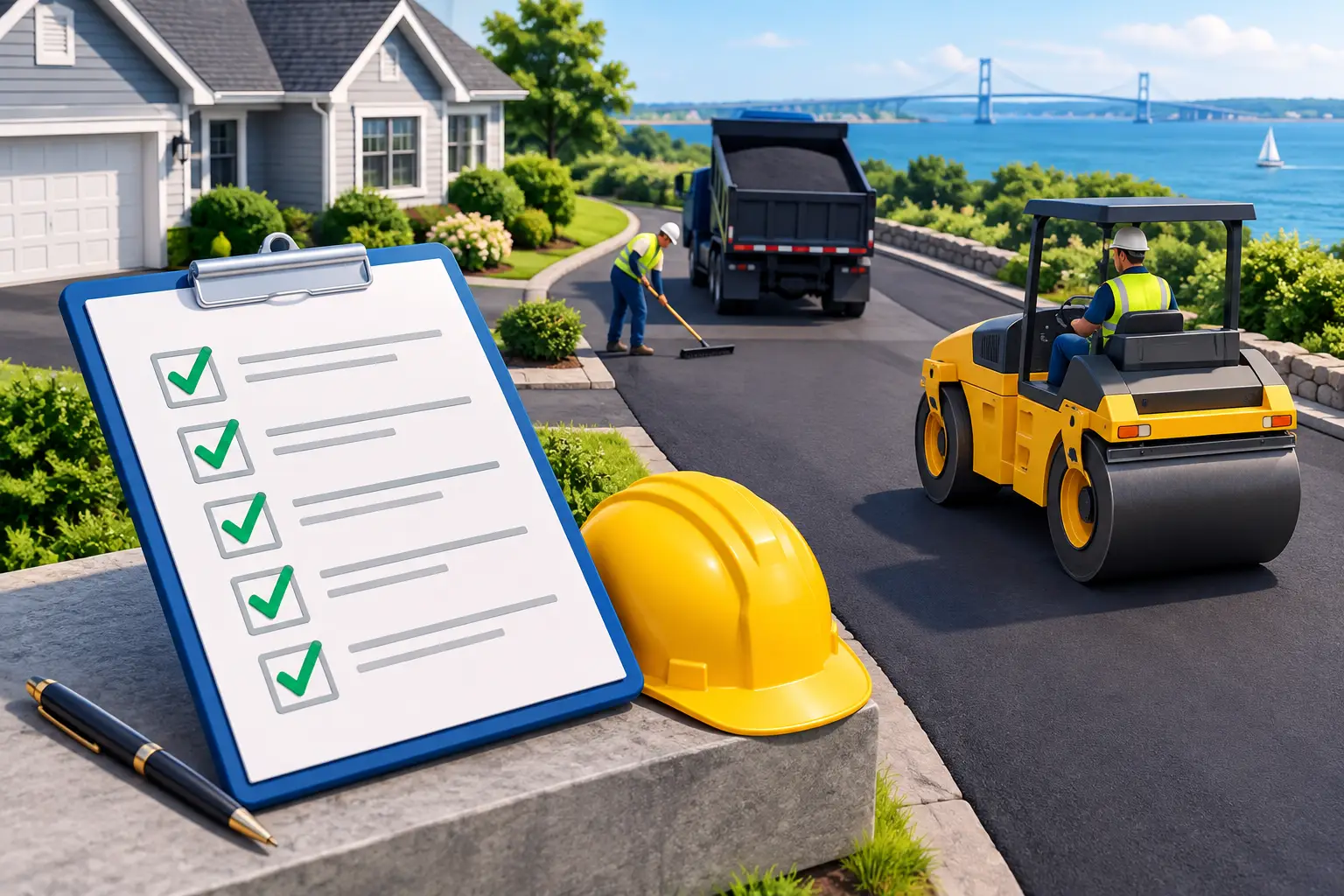
When comparing contractors, use reviews and estimates together. You want a crew with a record of good work and a plan that fits the condition of your pavement.
- Does the company have recent reviews that mention punctuality, fair pricing, communication, and clean job sites?
- Do customers describe work similar to your project, such as driveway replacement, asphalt repair, sealcoating, or commercial paving?
- Is the estimate written clearly enough to show what is included and what is not?
- Does the contractor explain the condition of your base, drainage, edges, and existing asphalt?
- Are the materials, preparation work, and expected timeline discussed before you agree to the job?
- Is the price believable compared with other local estimates, without vague add-ons or pressure to decide immediately?
- Will you have a clear point of contact if you have questions before, during, or after the project?
You do not need to become a paving expert to use this list. You simply need enough information to tell the difference between a clear proposal and a vague promise.
Compare Prices Without Choosing on Price Alone
Affordability matters. No homeowner or property manager wants to overpay for paving work. But the lowest number on paper is not always the lowest cost over time.
A cheaper estimate may leave out removal, base preparation, edge work, crack repair, or cleanup. It may also be based on a thinner application or a quick overlay over a surface that should have been rebuilt. Those shortcuts can lead to early cracks, water problems, and another repair bill sooner than expected.
At the same time, the most expensive estimate is not automatically the best one. Ask each contractor to explain why their recommendation and price differ. A straightforward answer should make sense without a long technical sales pitch.
For example, a simple driveway with a solid base may not need extensive excavation. A driveway with soft spots, poor drainage, or years of patchwork usually needs more preparation. The right scope depends on the property, and a good contractor will be honest about that.
Watch for Pressure Tactics
Be cautious if someone insists that you must sign immediately to keep a price, refuses to put details in writing, or claims they have leftover asphalt that must be used that day. A legitimate paving contractor should give you room to review the estimate and ask questions.
Weather can affect scheduling, especially for asphalt work. That is normal. What you should expect is clear communication if a date changes, not silence or repeated missed appointments.
Ask About Preparation, Drainage, and Edges
The smooth black surface is what everyone notices first. The work below and around it is what helps it last.
Preparation may include removing damaged asphalt, grading the area, compacting the base, and correcting low spots where water collects. Water is one of asphalt’s biggest enemies. If rain routinely pools near your garage, along the driveway edge, or in a parking lot, simply adding new asphalt without addressing the cause may not solve the problem.
Ask where water will flow after the job is done. You also want to know how the driveway edges will be finished. Unsupported edges can crack and crumble under vehicle weight, particularly where cars turn, park, or pull in from the street.
For commercial properties, discuss traffic patterns and access before work begins. A paving crew may need to phase the project so customers, tenants, deliveries, or employees can still move through the property as safely as possible.
Confirm Expectations for Timing and Care
A professional result should not come with confusion about what happens next. Before the project starts, ask when the crew will arrive, how long the work should take, and when you can drive or park on the new surface.
Fresh asphalt needs time to set. Exact timing depends on weather, thickness, and traffic, so follow the contractor’s directions rather than assuming the surface is ready right away. Avoid sharp turns from parked vehicles, kickstands, and heavy loads until the asphalt has had proper time to cure.
After installation, regular maintenance helps protect your investment. Keep the surface clean, address cracks before water gets underneath, and consider sealcoating at the interval recommended for your driveway’s condition and use. A high-traffic commercial lot will have different maintenance needs than a residential driveway with two cars.
Choose a Contractor Who Makes the Process Easier
The best asphalt contractor is not just the one who can lay pavement. It is the one who respects your property, explains the work clearly, arrives prepared, and stands behind the job. That is especially valuable when you are coordinating tenants, running a business, or trying to fit a driveway project into a busy household schedule.
Big Apple Paving and Remodeling takes a practical, customer-first approach to paving work across Long Island. A clear free estimate gives you the chance to discuss your driveway or property needs, compare options, and move forward without guesswork.
A contractor should leave you with more than a smooth surface. You should feel comfortable with the price, the plan, and the people doing the work.