
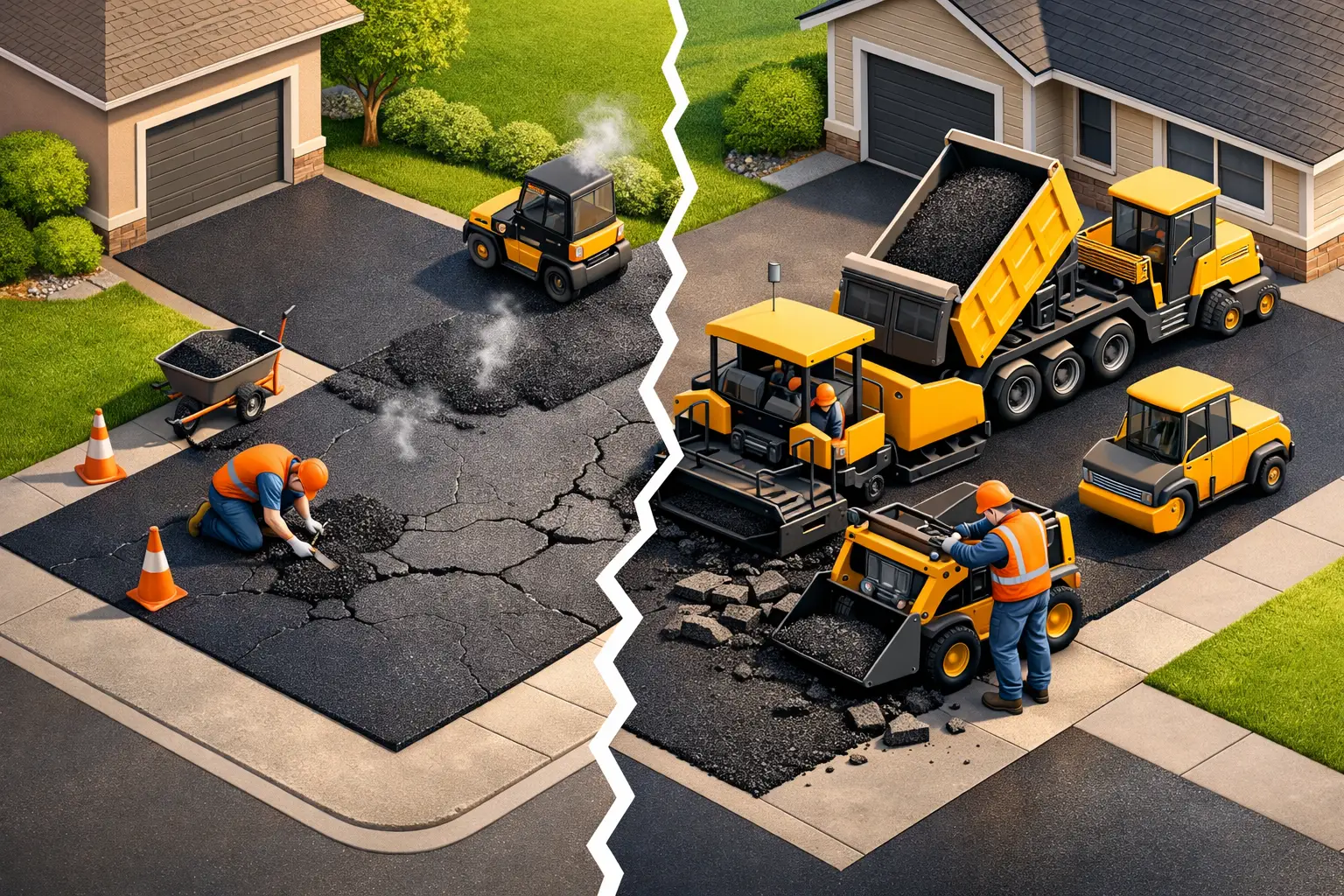
A driveway can look fine from the street while hiding the problems that shorten its life: water collecting near the garage, soft spots under the surface, or cracks that keep spreading after every winter. An asphalt driveway is a practical, attractive choice for Long Island properties, but its performance depends on more than the blacktop you see on top. Proper preparation, drainage, and timely maintenance make the difference.
For homeowners, landlords, and property managers, the goal is simple: a driveway that handles daily traffic, looks clean, and does not turn into a costly repair project every few years. Here is what to consider before repairing, replacing, or installing asphalt.
What Makes an Asphalt Driveway Last?
Asphalt is popular because it provides a smooth driving surface, can be installed efficiently, and is generally more affordable than many alternative paving materials. It also has some flexibility, which helps it handle temperature changes better than rigid surfaces.
Still, asphalt is only as reliable as the base beneath it. The visible surface is important, but the compacted stone base carries the weight of vehicles. If the base is weak, too thin, or poorly compacted, the driveway can settle, crack, and develop low areas even when fresh asphalt was installed correctly.
Water is the other major factor. Rain and melting snow should move away from the house, garage, and paved surface. When water sits on asphalt or works its way into cracks, it can weaken the base underneath. During freeze-thaw cycles, that trapped water expands and can make small cracks much worse.
A good paving plan considers the property as a whole. The driveway should have the right pitch, meet walkways and garage entrances cleanly, and direct water where it belongs. This is especially important on properties with drainage challenges, older driveways, or areas that receive regular vehicle traffic.
Repair or Replace: How to Tell the Difference
Not every cracked driveway needs a full replacement. Small surface cracks and weathered areas can often be repaired and sealed, especially if the base remains stable. Addressing minor damage early can help protect the existing pavement and delay the cost of a larger project.
Replacement becomes the better choice when the damage points to a base problem rather than normal surface wear. Paving over a failing driveway may improve its appearance for a short time, but it will not correct soft ground, serious settling, or poor drainage underneath.
Watch for these signs that a driveway may need more than a simple patch:
- Deep cracks that are widening, branching, or returning after prior repairs
- Potholes, crumbling edges, or loose asphalt in frequently traveled areas
- Low spots where water puddles after rain
- Ruts or depressions where vehicles park or turn
- Large areas that have sunk, heaved, or separated near the garage or curb
The right answer depends on the condition of the base and the amount of damage. A localized issue may only need repair, while widespread cracking and settlement often call for removal and a properly prepared new foundation. A straightforward on-site estimate can help clarify which approach makes sense for your budget.
The Asphalt Driveway Installation Process
A quality installation is not just a truck arriving with hot asphalt. The work begins with evaluating the existing surface, soil condition, drainage, driveway layout, and expected traffic. A driveway used by two passenger cars has different needs than one that regularly handles work vans, delivery vehicles, or heavier commercial traffic.
Removing Old Material and Preparing the Base
When a driveway needs full replacement, the old asphalt is removed so the contractor can address what is underneath. Soft areas may need to be excavated further before fresh aggregate is added. The stone base is then graded and compacted to create a stable foundation.
This step is where shortcuts can become expensive. A driveway may look smooth on installation day, but if the base is not properly built and compacted, settlement can show up later. Taking the time to prepare the ground correctly gives the new surface a much better chance of lasting.
Grading for Drainage
Before asphalt goes down, the driveway needs a plan for water. The finished grade should guide water away from buildings and avoid creating puddles in wheel paths or at the edge of the pavement.
Some properties need small adjustments to surrounding grades, transitions near walkways, or attention around downspouts. A driveway that drains well is easier to maintain and less likely to develop damage caused by standing water.
Installing and Compacting the Asphalt
Hot asphalt is spread at the planned thickness and compacted while it is workable. Proper compaction helps create a dense, even surface that stands up better to normal traffic and weather exposure.
The edges also matter. Unsupported edges can crack or break down, particularly where vehicles drive too close to the side of the driveway. A well-finished edge and a stable surrounding area help prevent that damage.
How Long Does Asphalt Take to Cure?
An asphalt driveway can usually be walked on soon after installation and driven on after it has cooled sufficiently, based on the contractor’s instructions. However, asphalt continues to harden over time. The first several months are when a new driveway is most vulnerable to sharp turns, heavy loads, motorcycle kickstands, and parked vehicles left in the same spot for long periods.
During warmer weather, asphalt can remain softer than many people expect. Avoid turning the steering wheel sharply while the car is stopped, and do not place heavy dumpsters or equipment on a new surface without discussing it first. If you need to park a trailer, boat, RV, or commercial vehicle, mention that during the estimate so the driveway can be planned for the load.
Protecting Your Driveway After Installation
Regular care does not need to be complicated. Keeping the surface clear of standing water, leaves, and spilled automotive fluids helps protect it. Gasoline, oil, and other fluids can soften asphalt over time, so clean spills as soon as possible.
Cracks should be addressed before water reaches the base. Even narrow cracks can allow moisture beneath the pavement, where the real damage begins. Sealcoating can also help protect sound asphalt from sun, rain, and normal wear, but it is not a fix for major structural problems. A sealcoat should be applied to a driveway that has been properly repaired and allowed to cure.
Snow removal deserves some care as well. Use a snowblower or plow with the blade set correctly so it does not scrape the asphalt surface or catch a raised edge. Avoid using sharp metal tools to chip ice directly from the pavement, particularly near cracks and driveway borders.
Cost Factors to Discuss Before Paving
There is no honest one-price answer for every driveway. The size of the area matters, but so do the amount of excavation required, base repairs, asphalt thickness, drainage needs, access for equipment, and the condition of the existing pavement.
A smaller driveway with difficult drainage or extensive base failure may require more work than a larger, level driveway with a sound foundation. That is why a free estimate should include a clear discussion of what is being repaired or replaced, not just a number for a new black surface.
For Long Island property owners, working with a local team that understands seasonal weather and common drainage conditions can make planning easier. Big Apple Paving and Remodeling focuses on practical recommendations, dependable scheduling, and quality work that respects the condition of the property and the customer’s budget.
A Driveway Is Part of Your Property’s First Impression
A clean, smooth driveway adds to curb appeal, but it also affects how safely and comfortably people use the property every day. Whether you are preparing a home for sale, maintaining a rental, improving a business entrance, or finally replacing a worn-out surface, the best time to address damage is before water and traffic make it worse.
Start by looking closely after the next rain. Where the water goes, where the driveway dips, and where cracks are growing will tell you a great deal about the work your property may need.