A parking lot does more than give customers a place to park. It is often the first part of your property they see, and a faded, cracked surface can make an otherwise well-kept business, apartment complex, or storefront look neglected. Parking lot sealcoating Long Island property owners schedule at the right time helps preserve the asphalt underneath, improve curb appeal, and reduce the chance that small surface issues become expensive repairs.
On Long Island, asphalt takes a beating. Summer heat, winter moisture, plows, road salt, vehicle traffic, oil drips, and the freeze-thaw cycle all work against it. Sealcoating is not a replacement for paving or major repairs, but it is one of the most practical maintenance steps a property owner can take when the pavement is still in serviceable condition.
What Sealcoating Actually Does for a Parking Lot
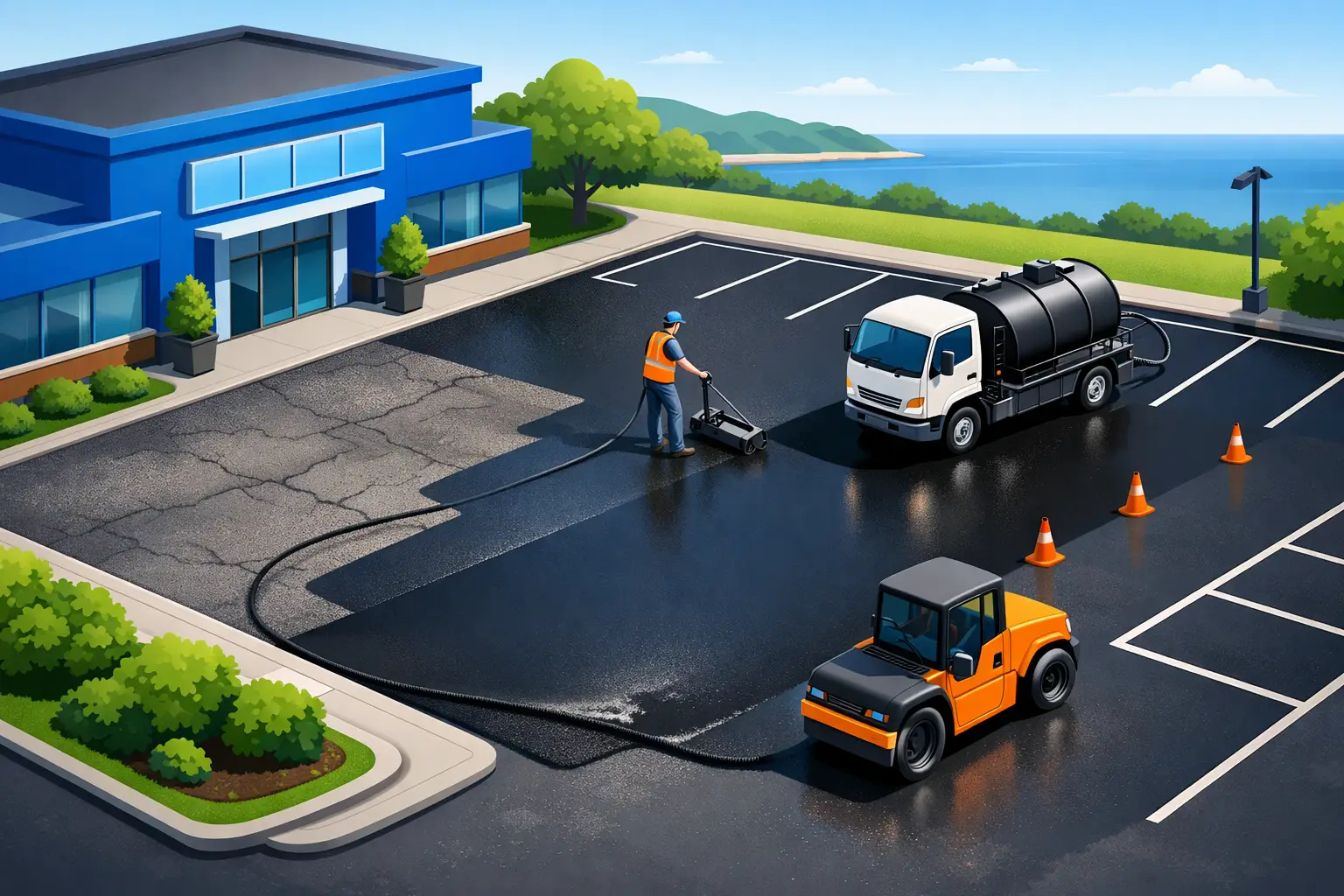
Asphalt contains binders that gradually dry out and wear away when exposed to sunlight, water, traffic, and chemicals. As that happens, the surface can turn gray, feel rough, and become more likely to crack. A professionally applied sealcoat creates a protective layer over the pavement, helping limit the damage caused by weather and daily use.
The result is a darker, cleaner-looking lot that is easier to maintain and more inviting to visitors. That matters for restaurants, offices, retail centers, medical practices, managed properties, and any business where customers make quick judgments before they walk through the door.
Sealcoating can also make parking lines stand out more clearly after restriping. Clean, visible markings help drivers move through the property safely and help maximize usable parking space. For commercial properties, that is not just an appearance issue. Clear traffic flow can reduce confusion near entrances, loading areas, and pedestrian walkways.
When Parking Lot Sealcoating on Long Island Makes Sense
The best time to sealcoat is before the pavement has widespread cracking, potholes, soft spots, or drainage failures. A sealcoat protects a sound surface. It does not fix structural problems underneath it.
Watch for a dull gray color, minor surface wear, fine cracks, fading around traffic lanes, or asphalt that seems dry and brittle. These are common signs that the lot may be ready for maintenance. Small cracks should be cleaned and filled first, since sealing over open cracks without repair allows water to keep reaching the base below.
Timing depends on weather as much as the condition of the asphalt. Sealcoat needs appropriate temperatures and dry conditions to cure properly. A contractor should not rush the work when rain is expected or when the pavement is wet. Long Island spring, summer, and early fall often provide the most reliable working conditions, but the right schedule depends on the forecast, the lot’s condition, and how much traffic the property handles.
A busy retail center may need work staged in sections to keep customer parking available. A small office lot or rental property may be easier to complete in one visit. The practical goal is to protect the pavement without creating unnecessary disruption for tenants, employees, or customers.
Preparation Makes the Difference
A good-looking black surface is not the only measure of quality. Much of the value of sealcoating comes from the preparation completed before the material is applied.
The parking area should be cleared of vehicles, debris, and loose material. Oil spots need attention because sealer may not bond well to contaminated areas. Cracks should be addressed, and damaged sections may need patching before the lot is sealed. If water is pooling in the same place after rain, that should be evaluated too. Sealcoating over a drainage problem may improve the appearance for a while, but it will not stop water from weakening the pavement underneath.
Edges, curbs, walkways, and building entrances also need to be protected from overspray or messy application. A careful crew takes the time to keep the job neat, especially at storefronts and residential communities where residents and visitors are moving through the property.
For a lot with substantial alligator cracking, deep potholes, or areas that sink under vehicle weight, repairs or resurfacing may be the better investment. An honest estimate should explain that difference clearly. Spending money to seal a failing surface can delay the real repair, not solve it.
What Affects the Cost of Sealcoating
There is no one-price answer for every parking lot. Size is a major factor, but it is not the only one. The amount of crack filling, patching, cleaning, edging, line striping, and access planning all affect the scope of work.
A lot with light wear and open access is usually more straightforward than a lot with heavy traffic, numerous islands, loading zones, tight entrances, and extensive repairs. Properties that need work completed in phases or outside normal business hours may also require more planning.
The lowest price is not always the best value if the estimate leaves out prep work, crack repair, or a clear plan for keeping the area clean and usable. Ask what is included, how the lot will be prepared, whether repairs are needed first, and how long vehicles should stay off the surface. Straight answers upfront help avoid surprises once the project begins.
How to Keep the New Surface Looking Better Longer
After sealcoating, allow the lot to cure according to the contractor’s instructions before reopening it to traffic. Cars, delivery trucks, dumpsters, and sharp turns can mark a fresh surface if it is used too soon. The exact waiting period can vary with weather, humidity, shade, and the type of sealer used.
Once the lot is back in service, simple maintenance goes a long way. Sweep away leaves and debris so water can drain. Clean fuel or oil spills promptly. Keep an eye on new cracks and have them filled before winter moisture works deeper into the pavement. If snow removal is part of your property plan, make sure plow operators know where curbs, drains, speed bumps, and fragile pavement edges are located.
It also helps to inspect the lot after major storms and at the end of winter. Catching a small problem early is usually less disruptive and less costly than waiting until it becomes a pothole or a larger patching project.
Choose a Contractor Who Plans Around Your Property
Commercial paving work should fit the way your property operates. A dependable contractor will discuss access, traffic patterns, tenant needs, deliveries, and the best way to schedule the job before arriving. Punctual service and clear communication matter, especially when a parking lot is part of your customers’ daily experience.
For Long Island property owners, the right approach is not automatically to sealcoat every surface on a fixed calendar date. It is to assess the pavement honestly, repair what needs repair, and apply protection while the asphalt is still worth preserving. Big Apple Paving and Remodeling provides straightforward estimates for property owners who want quality work, fair pricing, and a plan that respects their time.
A well-maintained lot sends a simple message: this property is cared for. Address the small signs of wear now, and your pavement can stay safer, cleaner, and more presentable for the people who use it every day.