A driveway has to do more than look good from the curb. It needs to handle daily traffic, changing Long Island weather, snow removal, rain, and the occasional delivery truck without becoming a constant repair project. When homeowners weigh pavers versus asphalt, the right choice usually comes down to budget, property layout, appearance, and how much maintenance they are comfortable taking on.
Both materials can create a durable, attractive surface when they are installed correctly. The better option is not always the one with the lower starting price or the more decorative finish. It is the one that fits how you use your property and what you expect from it over the years.
Pavers Versus Asphalt: The Main Difference
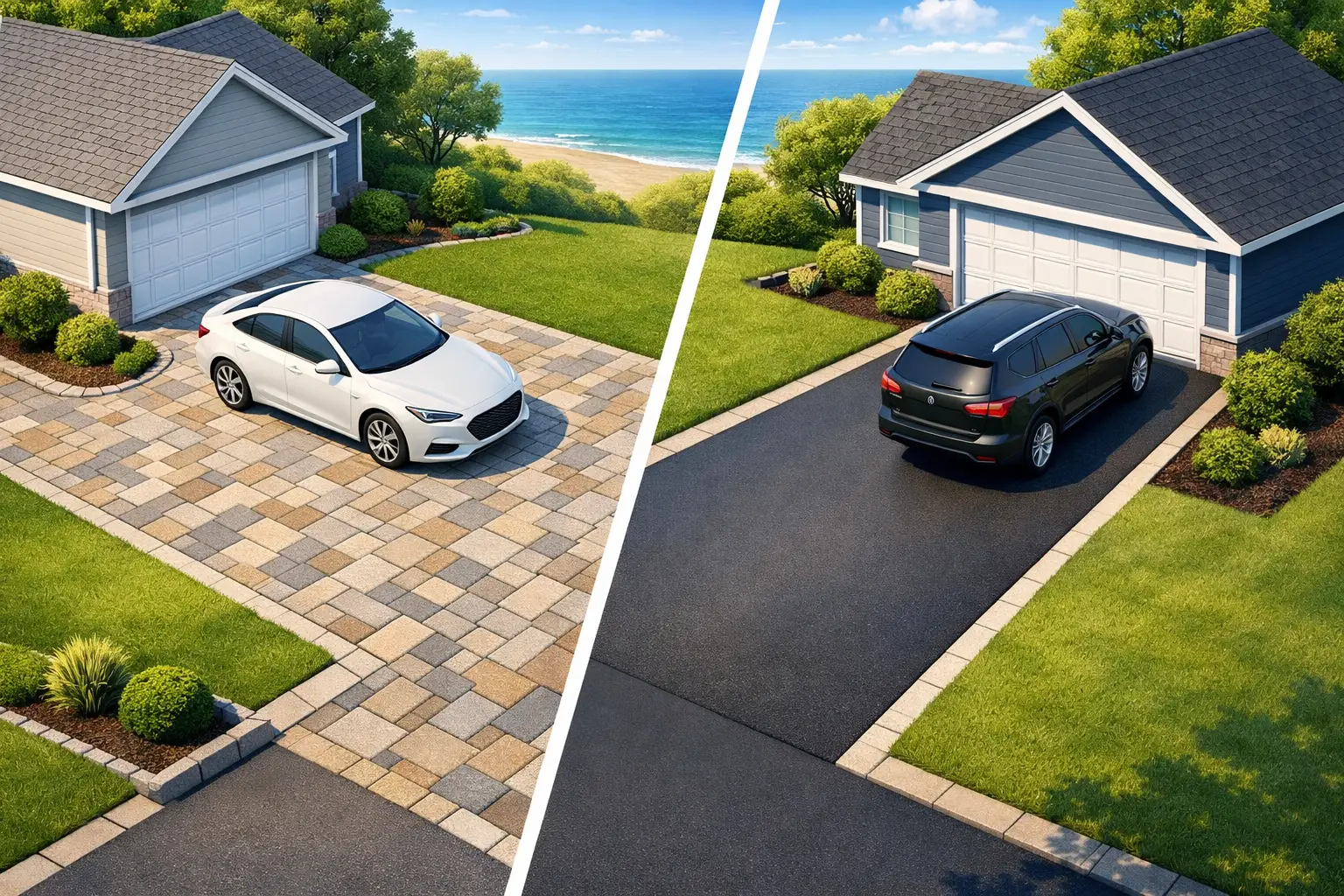
Asphalt is a smooth, flexible paving material made with aggregate and petroleum-based binder. It is installed as a continuous surface, which makes it a popular choice for driveways, parking areas, and commercial properties that need dependable coverage at a practical price.
Pavers are individual units, often made from concrete, natural stone, or brick, set over a prepared base. They offer more color, pattern, and design options than asphalt. A paver driveway can give a home a more finished, custom look, especially when it is paired with a matching walkway, patio, or retaining wall.
The biggest difference is simple: asphalt is generally chosen for value and efficient installation, while pavers are often chosen for appearance and design flexibility. There is overlap, though. A well-built asphalt driveway can look clean and sharp, and a simple paver design can be a practical long-term investment for the right property.
Upfront Cost and Long-Term Value
For most projects, asphalt costs less upfront than pavers. That makes it a strong choice for homeowners replacing a full driveway, landlords managing several properties, and commercial owners who need a large paved area without stretching the budget too far.
Pavers require more labor and more base preparation. Each paver must be placed, leveled, and finished carefully, so the initial investment is typically higher. Patterns, borders, curves, and premium materials can increase that price further.
Starting cost is only part of the picture. Asphalt normally needs sealcoating on a regular schedule to protect the surface from water, sunlight, oil, and normal wear. It may eventually need patching, crack repair, or replacement as it ages. Pavers do not need sealcoating in the same way, but their joints may need fresh sand, and individual areas can shift if the base settles or drainage is poor.
For a homeowner planning to stay in the house for many years, pavers may be worth considering if curb appeal is a major priority. For someone who needs a clean, durable driveway at an affordable price, asphalt often delivers better immediate value.
Appearance and Curb Appeal
Pavers have the advantage when the goal is a decorative, high-end look. They are available in a wide range of shapes, colors, sizes, and laying patterns. A paver driveway can complement a traditional colonial, a newer build, or a home with stone accents. Borders can define parking areas, while contrasting colors can tie the driveway into a front walkway.
Asphalt has a more uniform appearance, but that does not mean it looks plain when installed with care. A freshly paved blacktop driveway creates a crisp, clean surface that works well with nearly any home style. It is especially effective on wider driveways where an elaborate paver layout could become expensive quickly.
There is also a practical side to appearance. Asphalt’s dark color helps hide tire marks and everyday dirt. Pavers can show staining more noticeably, depending on their color and texture, although a damaged or stained paver can often be replaced one piece at a time.
Repairs and Maintenance Requirements
No driveway surface is completely maintenance-free. The best way to protect either material is to start with proper grading, a stable base, and drainage that directs water away from the driveway and foundation.
Asphalt is flexible, which helps it handle normal temperature changes. Over time, small cracks can develop from weather, vehicle weight, tree roots, or water getting below the surface. Addressing cracks early helps prevent them from spreading. Periodic sealcoating can restore the dark finish and help protect the pavement from the elements.
Pavers are easier to repair in a targeted way. If a few units crack, stain, or settle, those pavers can usually be removed and reset without replacing the entire driveway. That is a real benefit when a utility repair requires access below the surface.
However, pavers are not immune to movement. If the base was not compacted properly, sections can become uneven. Weeds may also grow in joints when joint sand has worn away or maintenance is neglected. These issues are manageable, but they should be considered before choosing pavers solely because they look more permanent.
Drainage Matters More Than Many Owners Expect
Water is one of the biggest threats to any paved surface. Standing water can weaken asphalt, contribute to cracking, and create icy areas in winter. With pavers, poor drainage can wash out joint material, cause settling, and leave uneven sections.
A good paving plan considers the slope of the property before work begins. The driveway should move water away from the house, garage, and low areas where puddles tend to form. In some cases, drainage improvements may be needed before new pavement or pavers are installed.
Pavers can be designed with permeable joints that allow water to pass through the surface and into a properly prepared base. This can be useful for certain properties, but it is not automatically the best answer for every driveway. The site conditions, soil, grading, and expected vehicle traffic all need to be evaluated first.
Winter Use, Snow Removal, and Daily Traffic
Long Island winters are another reason to think beyond appearance. Asphalt creates a smooth, uninterrupted surface that is easy to shovel and plow. Snow removal equipment moves across it easily, and there are no raised joints for a blade to catch.
Pavers can also handle winter conditions well, but they require a little more care. A plow should be set correctly so it does not scrape or dislodge the edge of a paver. Sand and de-icing materials should be selected with the paver material in mind. Some harsh products may discolor or affect certain surfaces over time.
For heavy daily traffic, both materials can perform well with the right base and installation. A family with several cars, a business with regular customer traffic, or a property expecting delivery vehicles should make sure the driveway is built for the load. Surface material matters, but the foundation underneath matters just as much.
Which Option Fits Your Property?
Asphalt is usually the practical choice when affordability, fast installation, and a smooth driving surface are at the top of the list. It works especially well for large driveways, parking areas, and property owners who want a dependable result without the higher cost of a decorative surface.
Pavers may be the better fit when the driveway is a major part of the home’s visual appeal and the budget allows for more detailed work. They are also worth considering for smaller driveways, entrance areas, walkways, and projects where matching other hardscape features matters.
Many properties do not need an all-or-nothing decision. An asphalt driveway with a paver border, apron, walkway, or entry detail can provide a polished look while keeping the main paving cost under control. That approach can be especially useful when improving curb appeal before selling or updating an older home in stages.
Before making a choice, walk the property with a contractor who will look at the current surface, slope, drainage, traffic needs, and budget. A clear estimate and honest recommendation are more useful than choosing a material based on a photo alone. Big Apple Paving and Remodeling helps Long Island property owners consider the practical details, so the finished driveway looks right, performs well, and stays within a comfortable budget.