A driveway has to handle more than cars. On Long Island, it takes summer heat, winter freezing, rain, road salt, delivery trucks, and the daily wear of coming and going. When comparing an asphalt versus concrete driveway, the right choice usually comes down to your budget, how quickly you need it installed, the look you prefer, and how much maintenance you are prepared to do over time.
Both materials can provide years of dependable service when they are installed over a properly prepared base. The material matters, but so does the contractor’s grading, drainage planning, edge work, and attention to detail. A good-looking driveway that holds water or sits on a weak base can develop problems far sooner than it should.
Asphalt Versus Concrete Driveway: The Main Difference
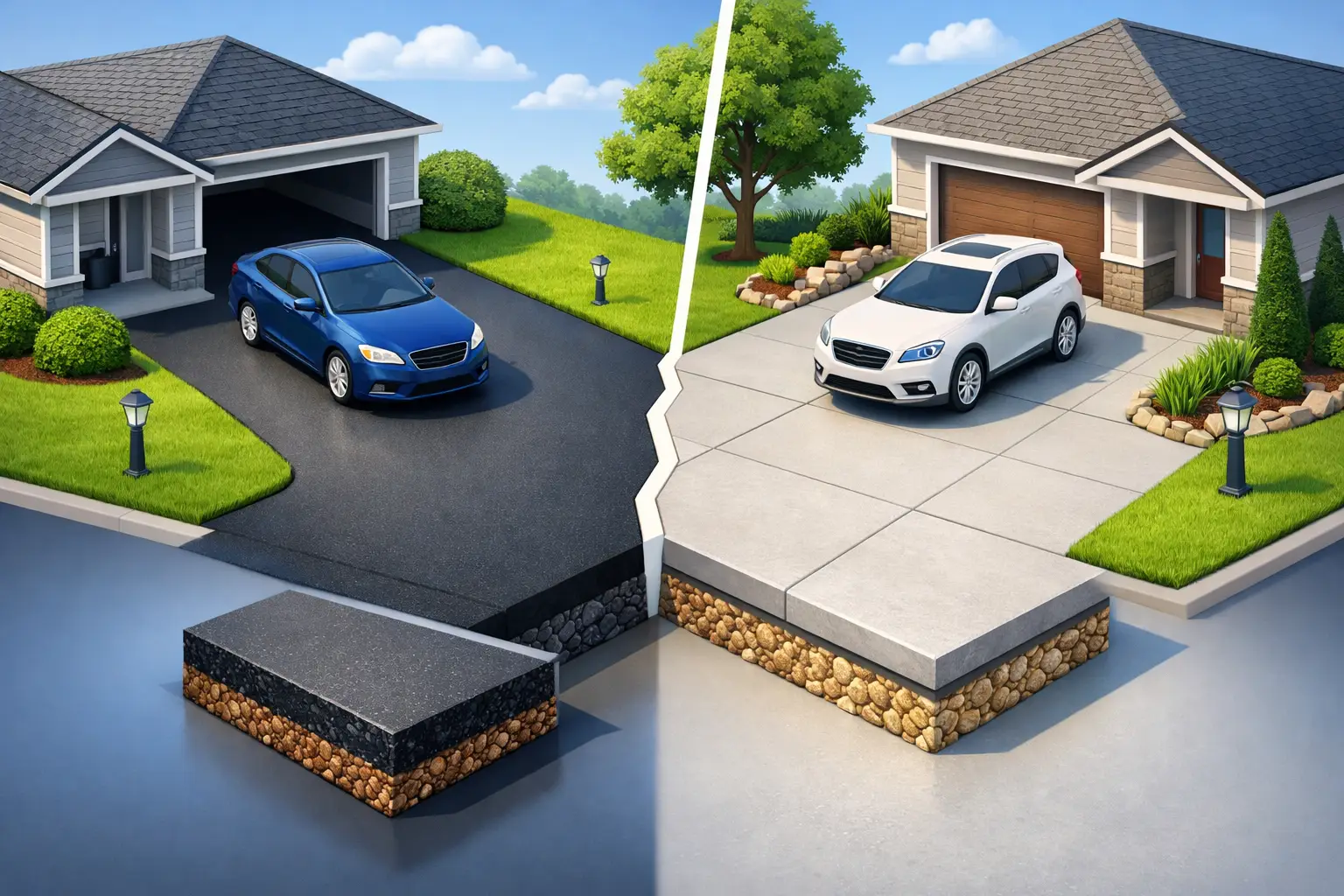
Asphalt is a flexible, dark paving material made with aggregate and a petroleum-based binder. It is widely used for residential driveways because it is generally more affordable, installs quickly, and performs well through changing temperatures.
Concrete is a rigid slab made from cement, sand, stone, and water. It offers a lighter, cleaner appearance and can last a long time, but it usually costs more upfront and takes longer before it is ready for vehicle traffic.
Neither material is automatically best for every property. A homeowner preparing a house for sale may value asphalt’s lower initial cost and fresh black finish. Someone planning a long-term exterior upgrade may prefer concrete’s appearance and potential lifespan. The best answer starts with the condition of your existing driveway and your goals for the property.
Upfront Cost and Installation Time
For many homeowners, asphalt wins on upfront price. Material and labor costs are typically lower than a new concrete driveway, especially for a larger surface. If your old driveway is cracked, uneven, or beyond repair, asphalt replacement can be a practical way to improve curb appeal without stretching the project budget.
Asphalt also has a shorter installation timeline. Depending on the size of the job and weather conditions, an experienced crew can often complete the paving work in a day. It needs time to cure, but it is generally ready for normal vehicle use sooner than concrete.
Concrete installation requires more preparation after the pour. The surface must cure properly before vehicles drive on it, and the crew must place control joints to help manage cracking. That additional labor and curing time are part of why concrete tends to cost more.
Price should not be the only deciding factor, though. A low bid that skips excavation, base repair, or proper drainage can become expensive later. Ask what is included in the estimate, how the base will be handled, and whether the contractor will correct low spots that allow water to collect.
Durability in Long Island Weather
Long Island weather puts every driveway material to work. Freezing and thawing can move the ground beneath a driveway, while rain and snowmelt can expose drainage issues. Road salt and deicing products add another layer of wear during the winter.
Asphalt has some flexibility, which helps it adjust to small movements in the ground. That flexibility is a real advantage in areas with seasonal temperature swings. It can still crack over time, particularly if water gets under the pavement or heavy vehicles repeatedly use the same area, but minor asphalt cracks are often straightforward to repair.
Concrete is stronger under heavy loads and can last for decades with proper installation and care. Its rigid nature, however, means movement below the slab may lead to cracks. Control joints guide where cracking is most likely to occur, but they do not make a concrete driveway crack-proof. In cold climates, moisture entering the surface and freezing can also cause scaling or surface damage.
Drainage matters just as much as the material. Water should run away from the house, garage, and low areas of the property. Whether you choose asphalt or concrete, a driveway should be graded correctly from the start.
Maintenance: Different Work, Different Schedule
Asphalt requires regular sealcoating to protect the surface from sun, water, oil, and everyday wear. Many driveways benefit from sealcoating every few years, depending on traffic and surface condition. Small cracks should be filled early before water works its way into the base below.
This maintenance is not complicated, but it should be planned for. The payoff is a refreshed black finish and a surface that is better protected against premature aging. For landlords and property managers, routine sealing can be an affordable way to keep a property looking cared for between larger paving projects.
Concrete does not need sealcoating as often as asphalt, but it is not maintenance-free. Periodic sealing can help protect it from stains, moisture, and deicing chemicals. Oil spills should be cleaned quickly, and harsh salt products should be used carefully. Concrete repairs can be more noticeable because a patched area rarely matches the original slab perfectly.
In simple terms, asphalt usually needs more frequent routine care, while concrete may need less frequent attention but can be more difficult and costly to repair when larger issues develop.
Appearance and Curb Appeal
A freshly paved asphalt driveway gives a property a clean, uniform look. Its dark surface creates a sharp contrast with lawns, landscaping, and light-colored siding. It is a popular choice for homes where a neat, classic driveway is the goal without adding unnecessary cost.
Concrete offers more design options. It can be broom-finished for traction, colored, stamped, or finished with decorative borders. Those options may suit homes with a more formal exterior design, paver walkways, or detailed landscaping. They also add to the project cost and may require a contractor with specialized finishing experience.
Consider how the driveway connects to the rest of the property. If you are also replacing walkways, adding pavers, updating retaining walls, or improving the front entrance, the driveway material should complement that work. A simple asphalt driveway can look excellent beside a well-maintained lawn and clean walkways. A decorative concrete driveway can make sense when the rest of the exterior has a more customized look.
Lifespan and Repair Expectations
A well-installed asphalt driveway commonly lasts around 15 to 25 years, and sometimes longer with consistent maintenance. Its lifespan depends heavily on the base, drainage, traffic level, and sealcoating schedule. Resurfacing may be an option when the base remains sound but the top layer is worn.
A properly installed concrete driveway can often last 30 years or more. That longer potential lifespan helps offset the higher starting price for some owners. Still, concrete’s longevity is not guaranteed. Poor drainage, improper installation, heavy salt use, and ground movement can all shorten its useful life.
Repairs are where the comparison becomes personal. Asphalt patches and crack repairs tend to blend in better over time, especially after sealcoating. Concrete repairs can be durable, but color differences and joint lines may remain visible. If matching appearance after repairs is a major concern, asphalt may be more forgiving.
Which Driveway Is Right for Your Property?
Choose asphalt if you want an affordable, dependable driveway with quick installation, a smooth black finish, and repairs that are generally manageable. It is especially practical for homeowners who are comfortable keeping up with periodic sealcoating.
Choose concrete if you have a larger upfront budget, want a lighter or more decorative surface, and prefer the potential for a longer lifespan. It can be a strong choice for properties with heavy vehicle use, provided the base and drainage are handled correctly.
Before deciding, look beyond the top surface. A trustworthy contractor should inspect the existing driveway, identify soft areas or drainage concerns, and explain whether repair, resurfacing, or full replacement makes the most sense. Big Apple Paving and Remodeling helps Long Island property owners make that decision with straightforward recommendations and free estimates.
The best driveway is not simply the one that costs the least or lasts the longest on paper. It is the one that fits your property, your budget, and the way you plan to care for it, with a solid base underneath it from day one.