
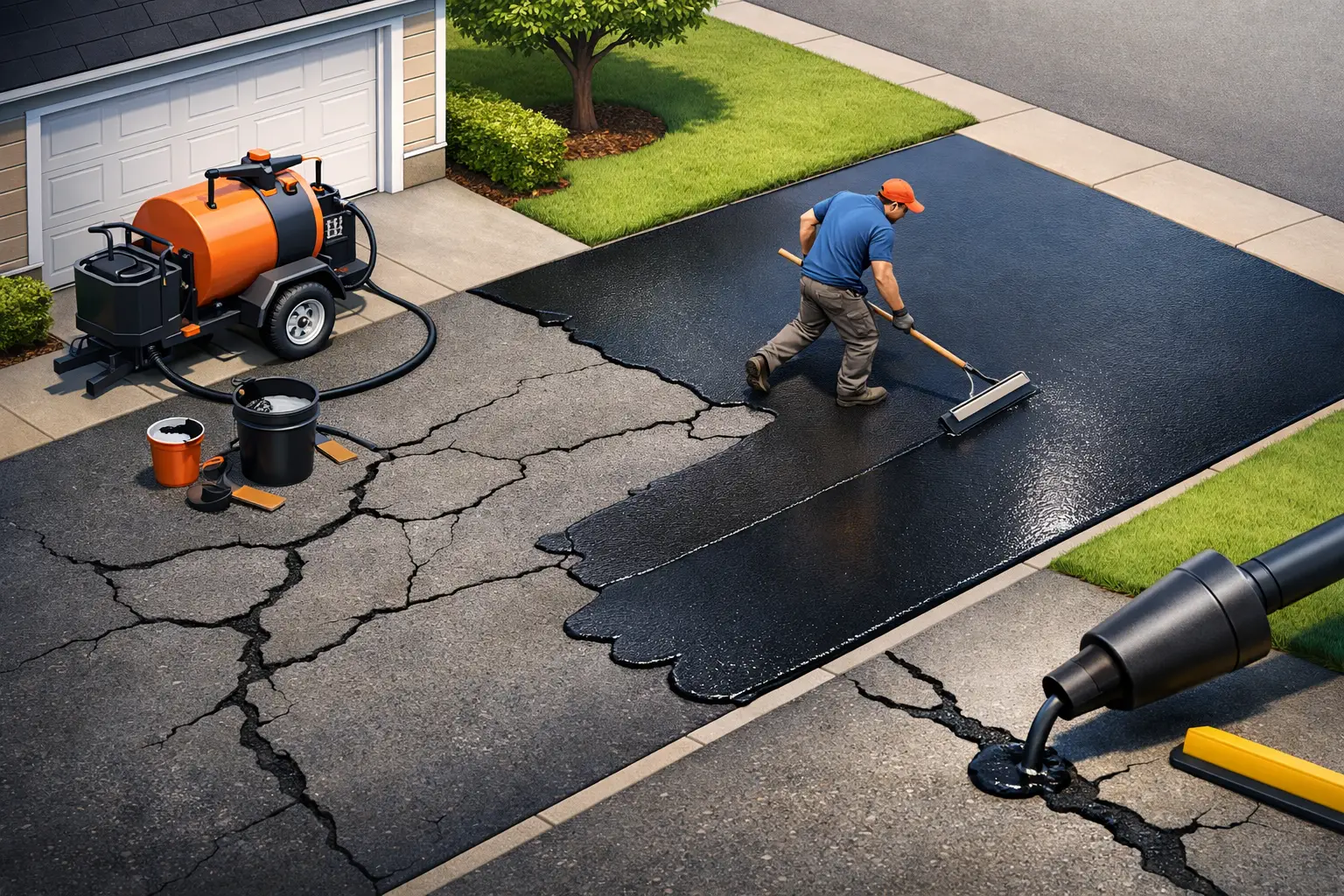
A few small cracks can make an otherwise solid driveway look worn out fast. Homeowners often ask, can sealcoating fix driveway cracks? The straightforward answer is no – not by itself. Sealcoating protects asphalt and improves its appearance, but cracks need to be repaired before the sealer goes on.
That does not make sealcoating any less valuable. When it is applied at the right time, after proper crack repair, it can help protect your driveway from water, sun, oil drips, and everyday wear. The key is knowing whether your driveway needs a simple maintenance visit, a targeted repair, or more extensive paving work.
Can Sealcoating Fix Driveway Cracks or Just Cover Them?
Sealcoating is a protective coating applied over an asphalt surface. It restores the darker finish people associate with a well-kept driveway and creates a barrier against elements that slowly break asphalt down. It is maintenance, not a structural repair.
A sealcoat may make very fine surface lines less noticeable for a while, especially from a distance. But it does not fill deep cracks, bond separated asphalt together, or repair the damaged base underneath. If a crack is left open and then covered with sealer, water can still find its way in. Once water reaches the base below the asphalt, it can weaken the driveway from the bottom up.
That is especially relevant on Long Island, where changing temperatures, rain, snow, and freeze-thaw cycles put real pressure on paved surfaces. Water enters a crack, freezes, expands, and makes that opening larger. A crack that looked minor one season can become a bigger repair after another winter.
Think of sealcoating as sunscreen for asphalt. It helps protect a driveway that is in reasonably sound condition. It cannot reverse damage that has already reached below the surface.
Which Driveway Cracks Need Repair First?
Not every crack means the driveway needs to be replaced. The size, pattern, depth, and cause of the damage all matter. A professional inspection can identify the right repair without pushing you into work your driveway does not need.
Hairline and small surface cracks
Small, narrow cracks are common as asphalt ages. If the surrounding surface is stable and the crack is not widening, crack filler or a rubberized crack sealant may be enough. Once those repairs have cured, sealcoating can help protect the surrounding asphalt and keep the surface looking more uniform.
It is still wise to address these cracks sooner rather than later. Small repairs are usually more affordable than waiting for water to widen the damage.
Wider cracks and separated joints
Cracks that are wider, deeper, or beginning to pull apart need more than a coat of sealer. These areas typically require proper cleaning and filling with the right repair material. The goal is to close the path where water enters and allow the repair to move with normal temperature changes.
Driveways often crack along edges, where vehicles turn or park repeatedly, and where two paved sections meet. Those locations may show signs that the asphalt is being stressed by traffic, poor drainage, or a weak edge.
Alligator cracking and soft spots
When cracks connect in a pattern that resembles alligator skin, the problem is usually below the surface. This type of cracking often means the driveway base has weakened. Sealcoating over it may darken the area temporarily, but the broken asphalt will continue to fail.
Soft spots, sinking sections, potholes, and areas that hold water also point to a deeper issue. These sections may need to be removed and patched, with base material repaired before new asphalt is installed. If large portions of the driveway show this kind of damage, replacement may be the better long-term value.
The Right Order: Repair, Prepare, Then Sealcoat
Good results depend far more on preparation than on simply applying a dark coating. A driveway should be cleaned and evaluated before sealcoating begins. Dirt, loose debris, weeds, and oil stains can interfere with how the sealer adheres to the surface.
First, visible cracks should be cleaned out and repaired. Loose asphalt around damaged areas should be removed, and potholes or failed sections should be patched correctly. Oil spots may need special treatment because oil can prevent a coating from bonding well.
After repairs are complete, the driveway needs time to dry and cure as required. Applying sealer over wet asphalt, fresh repair material, or a dirty surface can lead to uneven coverage and early wear. Weather matters too. A dry forecast and suitable temperatures give the coating the best chance to set properly.
Once the surface is prepared, sealcoating is applied in even coats. The finished driveway should be allowed to dry before foot traffic and vehicle traffic return. Rushing that final step can leave marks in the new coating and shorten its useful life.
When Is Sealcoating Worth It?
Sealcoating is usually a smart investment when the asphalt is still structurally sound but beginning to fade, dry out, or show minor surface wear. Newer asphalt also benefits from sealing after it has had adequate time to cure. The timing depends on the condition of the pavement, local weather, and the type of asphalt used.
For many residential driveways, sealcoating every two to three years is a reasonable maintenance schedule. Heavy traffic, frequent vehicle turning, direct sun, tree debris, and oil leaks can affect that timeline. Commercial lots and high-use parking areas may need a different schedule because their surfaces take more abuse.
More frequent sealing is not always better. If the coating is applied too often or on top of failed asphalt, it will not solve the underlying problem. The practical approach is to inspect the driveway each year, handle cracks and drainage issues early, and seal when the surface is ready.
Signs It May Be Time for More Than Sealcoating
A sealcoat is not meant to hide serious deterioration. Consider a repair assessment before sealing if your driveway has several of these conditions:
- Cracks that are wide, deep, or spreading quickly
- Potholes, crumbling edges, or loose pieces of asphalt
- Standing water after rain or snow melts
- Sunken areas, soft spots, or alligator-style cracking
These signs do not automatically mean full replacement is necessary. In some cases, a properly installed asphalt patch can restore the damaged area and extend the life of the rest of the driveway. In others, widespread base failure makes replacement the more cost-effective choice.
Protecting Your Driveway Between Services
A little routine care can make a real difference. Keep the driveway clear of leaves, dirt, and debris so water can flow off the surface. Avoid parking heavy equipment in the same location for long periods, particularly near the edges. Clean up gasoline, oil, and other automotive fluids promptly because they can soften asphalt.
Pay attention to drainage around the driveway as well. Downspouts that discharge directly onto pavement, low areas that collect water, and soil that washes against the asphalt edge can all speed up deterioration. Correcting water problems early helps protect both crack repairs and new sealcoating.
If you are unsure whether your driveway needs crack filling, patching, or sealing, an honest on-site look is the best place to start. Big Apple Paving and Remodeling can provide a free estimate and explain the work that makes sense for your surface, budget, and timeline. Taking care of a small crack now may be the step that keeps it from becoming a much larger driveway project later.