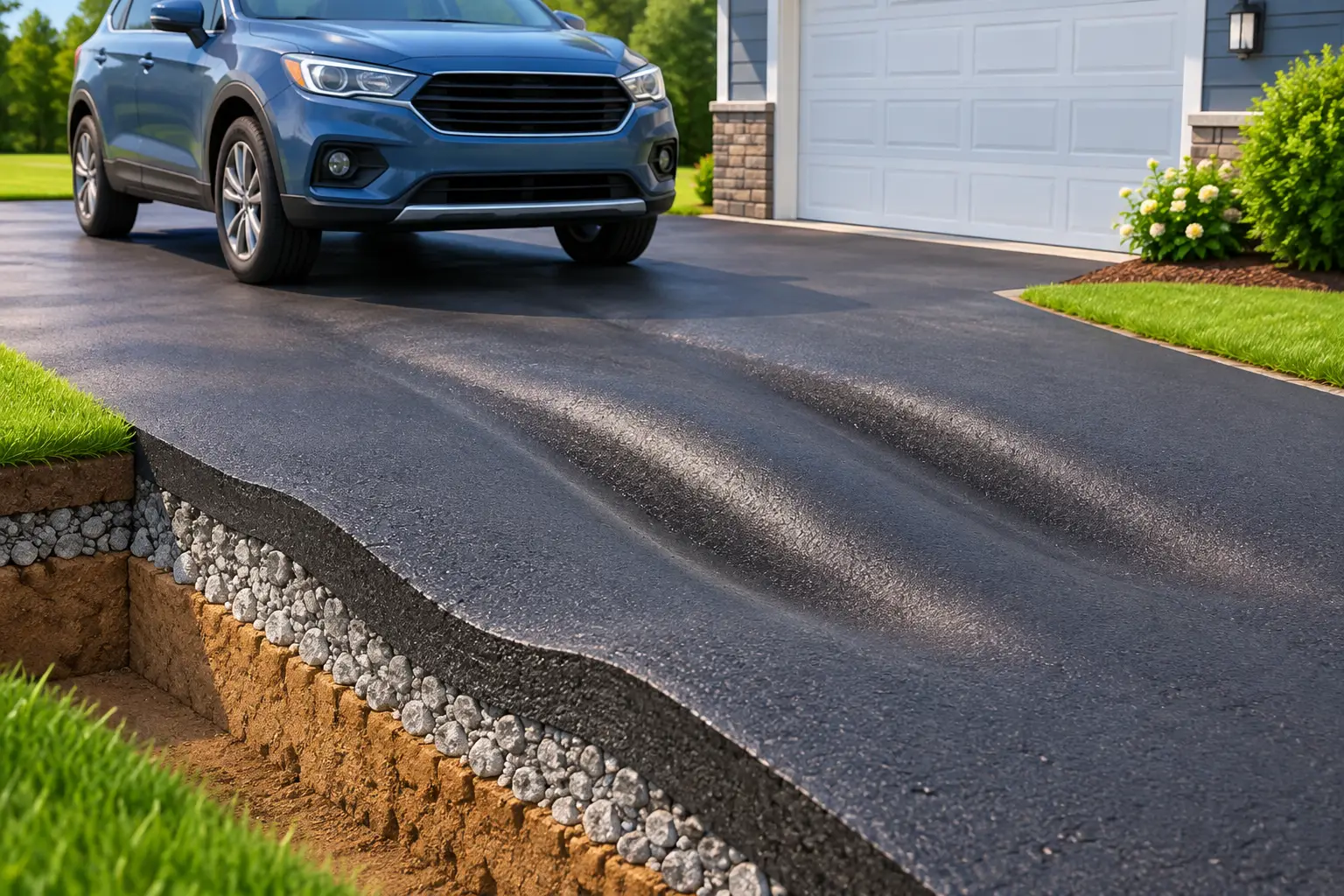
A driveway can look fine from the street but still be starting to fail under the tires. If you notice long, shallow depressions where vehicles regularly travel, you may be asking what causes asphalt rutting. Rutting is more than a cosmetic issue. It can hold water, make the surface uneven, and point to a problem below the asphalt itself.
For Long Island homeowners, landlords, and property managers, the right repair depends on why the rut formed in the first place. Filling the low spot without correcting the underlying cause may only buy a little time.
What Is Asphalt Rutting?
Asphalt rutting is a permanent groove, depression, or wheel track in a paved surface. It usually appears in the same paths where cars, trucks, delivery vehicles, or garbage trucks repeatedly travel. In a residential driveway, ruts often form near the garage, at a parking spot, or along the route vehicles use to enter and exit.
Some ruts develop slowly over years. Others can show up surprisingly quickly after a new paving job if the base was not prepared properly or the pavement was not built for the weight it carries. The key difference is that a rut does not spring back after a vehicle leaves. The material or the foundation beneath it has shifted, compressed, or failed.
What Causes Asphalt Rutting?
There is rarely just one answer. Asphalt rutting usually comes from a mix of traffic weight, heat, water, and weak support below the surface. A paving contractor should look at the location and shape of the rut before recommending a repair.
A weak or poorly compacted base
The stone base under asphalt does much of the heavy lifting. When it is too thin, contains soft material, or was not compacted in layers, vehicle weight presses the pavement down into the weak area. The asphalt may bend and crack because the ground below cannot support it.
This is one of the most common reasons a driveway develops deep ruts. Adding a new layer of asphalt over an unstable base can make the surface look better for a while, but the wheel tracks often return. In those cases, removing failed material and rebuilding the base is usually the more dependable fix.
Asphalt that is too thin for the traffic
A standard passenger car and a loaded box truck place very different demands on pavement. Driveways used only by family vehicles can often use a different pavement design than commercial lots, apartment properties, or homes where heavy service vehicles regularly pull in.
When asphalt is installed too thin, it has less ability to spread the load across the base. It can flex under pressure, especially at turning areas and parking spaces. Thin pavement may also crack at the edges before visible ruts become severe.
Heavy or repeated vehicle loads
Even well-built asphalt has limits. Garbage trucks, moving trucks, delivery vans, construction equipment, trailers, and commercial vehicles can create ruts when they repeatedly use the same path. A truck sitting in one spot during hot weather can leave a noticeable depression, particularly on older pavement.
Turning traffic is especially hard on asphalt. Tires twist against the surface as a vehicle turns, which can shove the asphalt sideways and create ripples or grooves. This is common near loading areas, tight drive lanes, dumpster pads, and driveway entrances.
Heat-softened asphalt
Asphalt naturally softens as temperatures rise. During a hot Long Island summer, a pavement surface can become much hotter than the outside air. If the asphalt mix is too soft for the application, or if heavy vehicles use it while it is hot, the surface can move under the tires.
Heat alone does not always cause rutting. A properly designed, well-supported driveway can handle normal seasonal heat. But high temperatures expose weaknesses in the asphalt mix, pavement thickness, and base preparation. That is why ruts may seem to get worse after a stretch of hot weather.
Water getting below the pavement
Water is a major enemy of asphalt. Rain and melting snow can enter through cracks, open edges, failed seams, and low areas that do not drain correctly. Once water reaches the base, it can soften the soil, wash away fine material, or reduce the base’s ability to carry weight.
Then vehicles press the asphalt into that weakened spot. You may notice that the rut holds water after every rainstorm. That standing water can make the problem worse by feeding more moisture into the damaged area.
Poor drainage often needs to be addressed along with the asphalt repair. Otherwise, a fresh patch can be placed over the same wet, unstable conditions that caused the rut.
Poor asphalt mix or installation practices
The asphalt itself must be mixed, placed, and compacted correctly. If a mix has too much binder, the wrong aggregate balance, or poor density after compaction, it may be more likely to deform under traffic. Problems can also occur when asphalt is installed at an improper temperature or rolled incorrectly.
Homeowners do not need to diagnose the mix design themselves. What matters is recognizing when a rut appears soon after installation, spreads across a new surface, or develops in areas without unusually heavy traffic. Those signs may call for a closer look at the workmanship and the underlying preparation.
Aging pavement and missed maintenance
Older asphalt gradually loses flexibility as sunlight, oxygen, water, and traffic take their toll. Small cracks allow more water inside, and the surface becomes less able to handle weight. A driveway that has gone many years without crack repair or sealcoating may be more vulnerable to rutting, especially where the base is already marginal.
Sealcoating is not a cure for structural rutting. It protects the surface from weather and helps extend the life of sound asphalt, but it cannot rebuild a failed base or restore asphalt that has sunk under traffic. Repairing the damaged area first is the better approach.
How to Tell Whether a Rut Needs Repair
A shallow surface depression is not always an emergency, but it should not be ignored. Watch for ruts that collect water, become deeper over time, crack along the edges, or feel uneven when you drive over them. These are signs that the issue may be structural rather than just a worn surface.
Also look at where the rut is located. A groove near the edge of a driveway can mean the edge lacks support. A rut in the center of a parking space may point to a weak base. Repeated depressions at an entrance or turn area may mean the pavement is seeing heavier traffic than it was designed to handle.
For commercial properties, uneven pavement can become a trip hazard and create drainage problems around walkways or entrances. Addressing it early is generally less disruptive and more affordable than waiting until the damaged area breaks apart.
The Right Repair Depends on the Cause
For a small, isolated low spot with a solid foundation, a properly prepared asphalt patch may be enough. The damaged asphalt is removed, the area is cleaned and shaped, and new hot asphalt is compacted to restore the surface.
If the base beneath the rut is soft or has washed out, the repair needs to go deeper. The contractor may need to excavate the failed section, rebuild and compact the stone base, correct drainage concerns, and then install new asphalt. This takes more work than a surface patch, but it addresses the reason the rut formed.
When rutting appears across a large portion of an older driveway or lot, patching one spot at a time may stop making financial sense. Milling and resurfacing or full replacement may be the better value, depending on the condition of the base. A straightforward on-site evaluation can help separate a repairable area from pavement that is nearing the end of its life.
Preventing Ruts Before They Start
The best prevention begins before asphalt is installed. A stable, well-compacted base, the right asphalt thickness, proper grading, and drainage that directs water away from the pavement give a driveway its long-term strength.
After installation, avoid letting heavy vehicles sit in the same place for long periods, especially during very hot weather. Repair cracks before water gets below the surface, keep edges supported, and do not let runoff repeatedly drain onto the driveway. For properties with regular truck traffic, it is worth planning the pavement around those loads instead of treating them like occasional use.
If wheel tracks are already showing up, it is a good time to have them checked before rain, traffic, and seasonal temperature changes turn a manageable repair into a larger project. Big Apple Paving and Remodeling can assess the condition of the asphalt, explain the practical options, and provide a clear estimate for a repair built to last.