A retail parking lot makeover example is often less about making asphalt look brand-new and more about removing the small frustrations that make customers hesitate. A faded entrance, potholes near the front doors, confusing traffic lanes, and puddles after rain can make a well-run store feel neglected before anyone walks inside. For a retail property, the parking lot is part of the customer experience.
Consider a neighborhood shopping center with a busy grocery store, a salon, and several smaller storefronts. The businesses were open and attracting customers, but the parking area was working against them. The pavement had cracks throughout the driving lanes, several parking spaces had faded beyond recognition, and water collected along the curb after every storm. The owner wanted a better-looking lot, but more importantly, they needed a practical plan that would not disrupt tenants for weeks or spend money where it was not needed.
What This Retail Parking Lot Makeover Example Started With
The first step was an honest look at the pavement. Not every worn parking lot needs to be torn out and replaced. Full replacement can be the right choice when the base under the asphalt has failed, the lot has widespread deep cracks, or large areas are sinking. But when the foundation is still sound, targeted repairs followed by sealcoating and fresh striping can provide a major improvement at a more affordable price.
In this case, the worst damage was limited to a few high-traffic areas: the entrance, the delivery path behind the stores, and several spots where water had been sitting. Those sections received asphalt repairs. Cracks in the remaining pavement were cleaned and sealed to help keep water from working beneath the surface. Addressing cracks early matters because water is one of asphalt’s biggest enemies, especially through Long Island’s changing seasons.
The owner also had to decide whether to repair only the obvious damage or deal with the drainage issue at the same time. Ignoring standing water would have been cheaper in the short term, but it would have shortened the life of the new work. The final plan included correcting the low areas before the surface treatment went down. That added work, but it protected the investment and reduced slippery puddles for customers.
The Work That Made the Biggest Difference
Once the damaged areas were repaired and allowed to cure, the lot was prepared for sealcoating. Sealcoating does not fix structural failure, but it is a smart maintenance step for pavement that is in serviceable shape. It gives the surface a clean, uniform dark finish and adds protection against sun, moisture, vehicle fluids, and daily wear.
For this shopping center, the visual change was immediate. The stores had not changed their signs or remodeled their interiors, yet the property looked more cared for because the pavement no longer appeared gray, patchy, and tired. That is one reason regular asphalt maintenance can be valuable for commercial properties. It helps the entire site present itself better without requiring a full reconstruction.
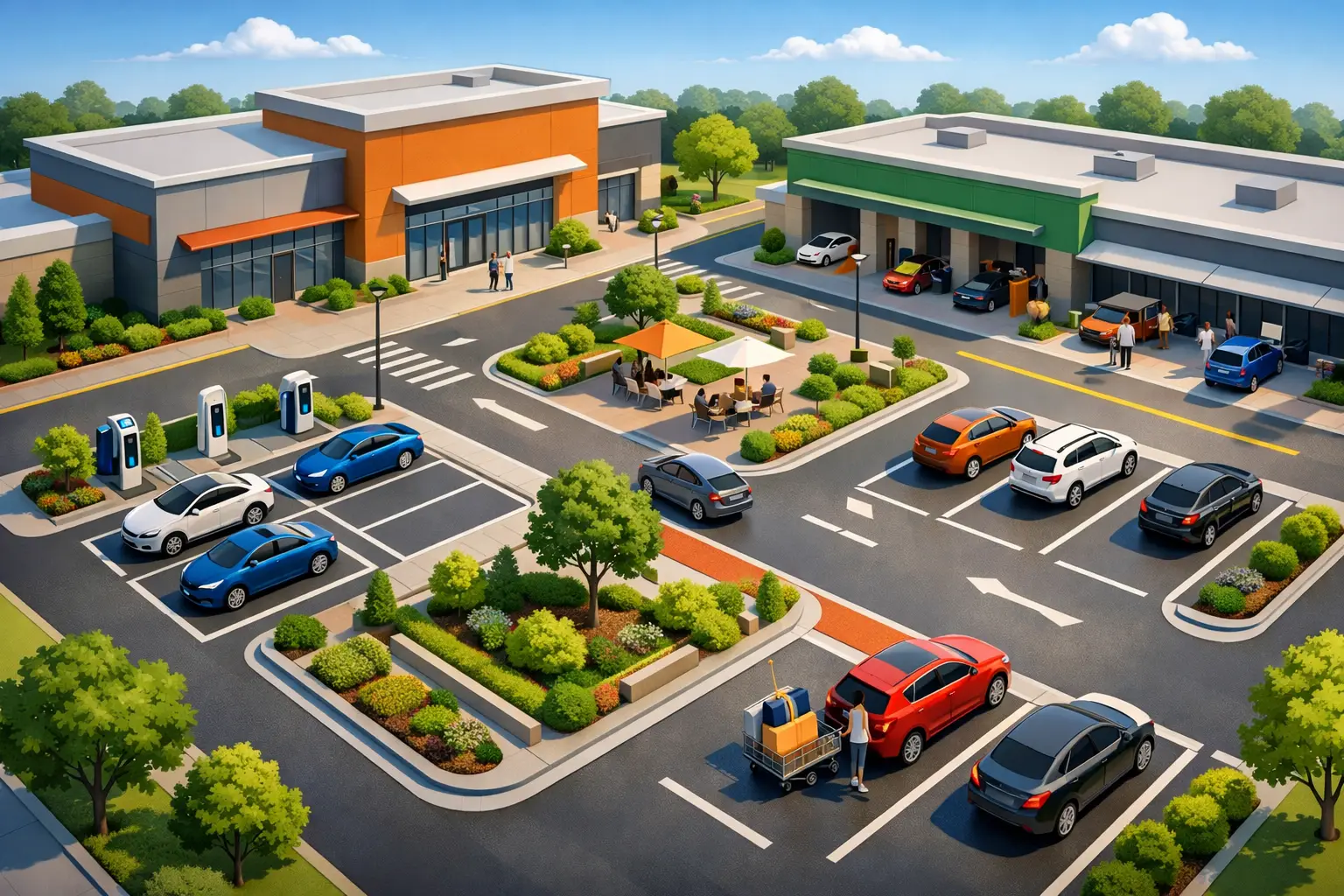
Fresh pavement markings were equally important. The crew restriped standard spaces, accessible spaces, crosswalks, directional arrows, loading zones, and fire lanes. Clear striping helps drivers understand where to go before they stop in the middle of a lane or make a last-second turn. It also makes better use of the available parking area.
The property owner chose bright, straightforward markings instead of trying to squeeze in extra spaces. That was the right call. A crowded layout may look efficient on paper, but spaces that are too tight and driving lanes that are too narrow can lead to door dings, traffic backups, and customer complaints. Good parking lot design has to balance capacity with comfort and safety.
Keeping Businesses Open During the Makeover
For retail properties, scheduling can be as important as the paving work itself. Closing every parking space at once would have caused problems for the tenants, especially the grocery store. Instead, the job was divided into sections.
The contractor worked on one area at a time, with clear cones and temporary signs directing drivers to open spaces. Heavier repair work was scheduled during lower-traffic hours where possible. Sealcoating and striping were planned around curing times so vehicles would not return to the treated surface too soon.
This approach took coordination, but it kept the businesses accessible. Property managers should let tenants know what is happening well before work begins, including which entrances may be affected and where employees should park. Customers are usually understanding when they see an active improvement project, especially if the directions are clear and the inconvenience is temporary.
A lower-cost contractor is not always the better value if the crew arrives late, leaves the site difficult to navigate, or stretches a short project into multiple unnecessary days. Commercial paving work should be organized around the property and its customers, not just the contractor’s convenience.
Why the Before-and-After Matters to Retail Customers
A parking lot makeover is not only cosmetic. The improvements in this example solved daily problems that customers and tenants noticed right away. Drivers could see the spaces and travel lanes more clearly. Pedestrians had more visible crosswalks. Water no longer pooled near the busiest storefronts. The repaired entrance reduced the jolt drivers felt when pulling in from the street.
Those details affect how people feel about a property. Customers may not compliment a freshly sealed lot the way they would a new storefront sign, but they do notice when parking is easy and the walk to the entrance feels safe. They also notice potholes, faded accessible markings, and neglected curbs. The lot sends a message before a business gets the chance to make one inside.
For landlords and property managers, the benefits extend to maintenance planning. Repairing damaged sections and sealing the rest of the pavement can delay the much larger cost of full replacement. It is not a permanent cure for every lot, but it can be a sensible move when the pavement has life left in it.
A Retail Parking Lot Makeover Plan Should Fit the Property
There is no single repair plan that fits every retail site. A small strip center with light traffic may need crack filling, sealcoating, and restriping. A busy plaza with delivery trucks, poor drainage, and extensive alligator cracking may need deeper asphalt removal and replacement in key areas. A property with safety concerns may also need attention to curbs, walkways, wheel stops, or accessible parking layout.
The right recommendation starts with the condition of the asphalt, how the lot is used, and how quickly the owner needs the work completed. Spending too little can mean patching the same trouble spots again soon. Spending too much on full replacement when a well-planned repair would do is not smart either.
A dependable local contractor should explain the difference in plain language, identify what needs immediate attention, and provide an estimate that makes sense for the property. For Long Island retail owners, Big Apple Paving and Remodeling can help assess worn pavement, plan repairs around business hours, and improve the look and function of a commercial lot without making the process harder than it needs to be.
The best parking lot makeover does not call attention to itself for long. After the work is done, customers simply pull in, find a space, walk safely to the door, and focus on why they came.