A driveway can look worn out long before it has truly failed. Fading color, shallow cracks, and a rough surface may make you think full removal is the only answer. But when comparing asphalt resurfacing versus replacement, the right choice comes down to what is happening beneath the top layer – not just what you can see from the curb.
For Long Island homeowners, landlords, and property managers, the goal is usually simple: get a safe, clean-looking surface without spending money on work the property does not need. A professional inspection can separate surface-level wear from deeper structural trouble and help you make a practical decision.
What Asphalt Resurfacing Means
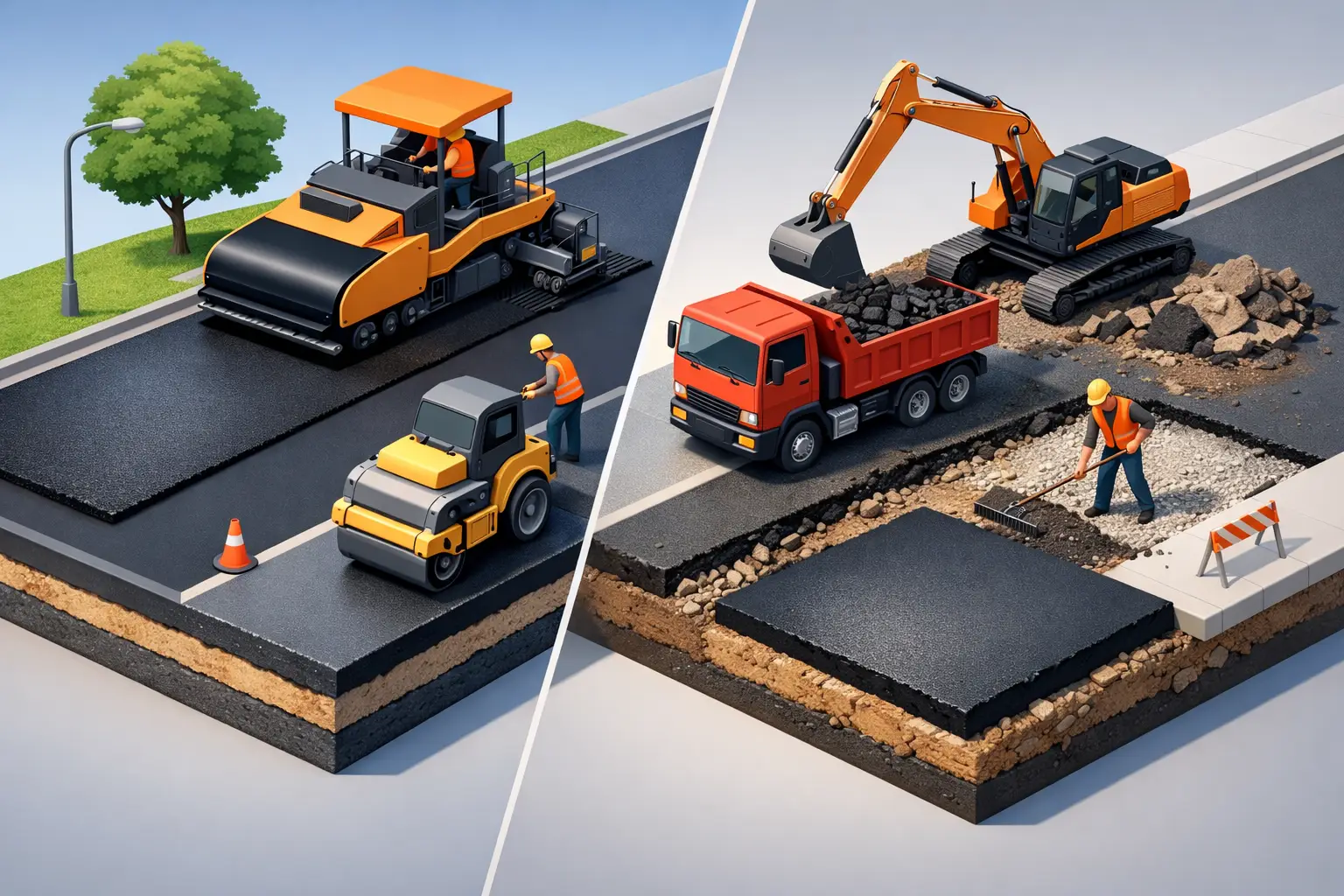
Asphalt resurfacing, sometimes called an overlay, gives an existing paved surface a new wearing layer. The crew prepares the old asphalt, addresses suitable minor repairs, and installs a new layer of hot asphalt over the existing base. The finished surface looks smooth, dark, and renewed.
Resurfacing is not the same as sealcoating. Sealcoating is a protective maintenance treatment that refreshes the appearance and helps shield asphalt from water, sun, oil, and normal wear. It does not add structural strength or correct damaged pavement. Resurfacing adds actual new asphalt and is used when the pavement has aged beyond what sealcoating can reasonably handle.
A good overlay can be an excellent option for a driveway or parking area with a stable foundation. It improves the surface, smooths minor imperfections, and can extend the usable life of the pavement at a lower cost than a complete rebuild.
When resurfacing is a good fit
Resurfacing often makes sense when the existing asphalt has light to moderate surface cracking, weathering, small low spots, or a generally tired appearance, but the base underneath remains solid. The pavement should still drain properly, with no widespread movement or major soft areas.
For example, a driveway that is 12 to 18 years old may have a network of small cracks and noticeable fading, yet still feel firm under vehicles. If repairs are completed correctly before the overlay goes down, resurfacing may provide a strong, attractive result without the cost of excavating the entire driveway.
Timing matters. Resurfacing works best before minor issues become major failures. Waiting until cracks have opened widely, water has reached the base, and sections are sinking can remove resurfacing from the list of sensible options.
What Full Asphalt Replacement Includes
Full asphalt replacement means removing the existing pavement and rebuilding it from the ground up. The old asphalt is taken out, the base is inspected and repaired or rebuilt as needed, and new asphalt is installed.
This is the more involved choice, but it solves problems an overlay cannot fix. A new asphalt surface placed over a failing foundation may look good at first, but the old trouble below can return through the new layer. That is why replacement is often the better long-term value when the base has lost its strength.
Replacement also gives you the chance to correct grading and drainage issues. Water is one of asphalt’s biggest enemies. If a driveway sends water toward the garage, pools after rain, or allows runoff to sit along the edges, a full rebuild may be the opportunity to create the proper slope and protect the pavement going forward.
Signs your pavement may need replacement
No single crack automatically means replacement. The concern is the overall condition and pattern of damage. Full replacement is often worth considering when you see several of these problems:
- Deep potholes, crumbling areas, or widespread alligator cracking that resembles a reptile’s skin
- Noticeable sinking, heaving, or soft spots where the surface moves under vehicle weight
- Large cracks that keep reopening after repair
- Standing water caused by poor grading or failed drainage
- Broken or deteriorated driveway edges, especially where vehicles frequently drive or park
Alligator cracking is a particularly important warning sign. It commonly indicates that the pavement and base have weakened under traffic or water damage. Covering that damage with a thin overlay may only hide it temporarily.
Asphalt Resurfacing Versus Replacement Costs
Cost is an understandable part of the decision. Resurfacing generally costs less than replacement because there is less demolition, hauling, excavation, and base work involved. It can be a smart way to improve curb appeal and function while keeping a property-maintenance budget under control.
Replacement costs more upfront because it requires more labor, materials, equipment, and preparation. However, it can cost less over the life of the driveway when the existing pavement has serious base failure. Paying for an overlay that cracks or settles within a short time is not a bargain.
The price for either project depends on the size and shape of the area, access for equipment, the amount of repair needed, drainage conditions, thickness requirements, and the condition of the existing base. A small driveway with difficult access can require more hand work than a larger, open area. Commercial properties may also need to plan around traffic flow, deliveries, and customer access.
The best question is not simply, “Which option is cheaper?” Ask which option addresses the condition of the pavement and gives the property the most dependable result for the money.
How Long Each Option Can Last
A properly resurfaced driveway can provide many additional years of service when it is installed over a stable base and maintained well. Full replacement can last longer because it begins with a rebuilt foundation, assuming the base, drainage, and installation are handled correctly.
Neither service is permanent. Asphalt lives outdoors through sun, rain, snow, freeze-thaw cycles, vehicle traffic, and spills. Maintenance has a real effect on how long it stays in good condition.
After a new surface has cured, regular sealcoating can help protect it from the elements. Prompt crack repair helps keep water from entering the pavement. Avoiding heavy trucks at the edges, keeping drainage paths clear, and addressing oil leaks are small habits that can prevent expensive damage later.
The Height and Drainage Question
Resurfacing raises the pavement height because a new layer is added on top of the old one. That detail can matter more than homeowners expect. The new surface must work properly at the garage entrance, sidewalks, curbs, gates, and adjoining landscaping.
If the added height creates a drainage problem or leaves too little clearance at a garage threshold, replacement may be the better path. During a full replacement, the old asphalt can be removed and the new pavement can be built to the right finished height.
This is also why a quick look from the street is not enough to choose between the two services. A qualified paving contractor should evaluate the grade, the edges, the existing cracks, and how water moves across the property before recommending a solution.
Choosing the Right Option for Your Property
If your asphalt is structurally sound but looks aged, resurfacing may offer the practical middle ground. It provides a renewed surface and improved appearance without paying for unnecessary excavation. This is often a good choice for well-built driveways, private roads, and parking areas that have kept their shape but need more than sealcoating.
If the pavement is sinking, breaking apart, holding water, or showing widespread deep cracking, replacement is usually the more responsible investment. It deals with the cause of the damage instead of covering it up.
For a rental property or commercial site, consider the effect of recurring repairs on tenants, customers, and daily operations. A patched parking lot may be workable for a while, but repeated potholes and uneven walking surfaces can become a safety and appearance concern. A planned replacement may be easier to budget for than frequent emergency repairs.
Big Apple Paving and Remodeling helps property owners across Long Island assess the real condition of their asphalt and choose work that fits the property and budget. The right recommendation should be clear, straightforward, and based on what the pavement needs – not on pushing the biggest possible job.
A smooth black driveway is satisfying, but the real value is underneath it. Before choosing resurfacing or replacement, have the base, drainage, and damage evaluated honestly. That simple step can help you spend wisely now and avoid seeing the same cracks return far too soon.