
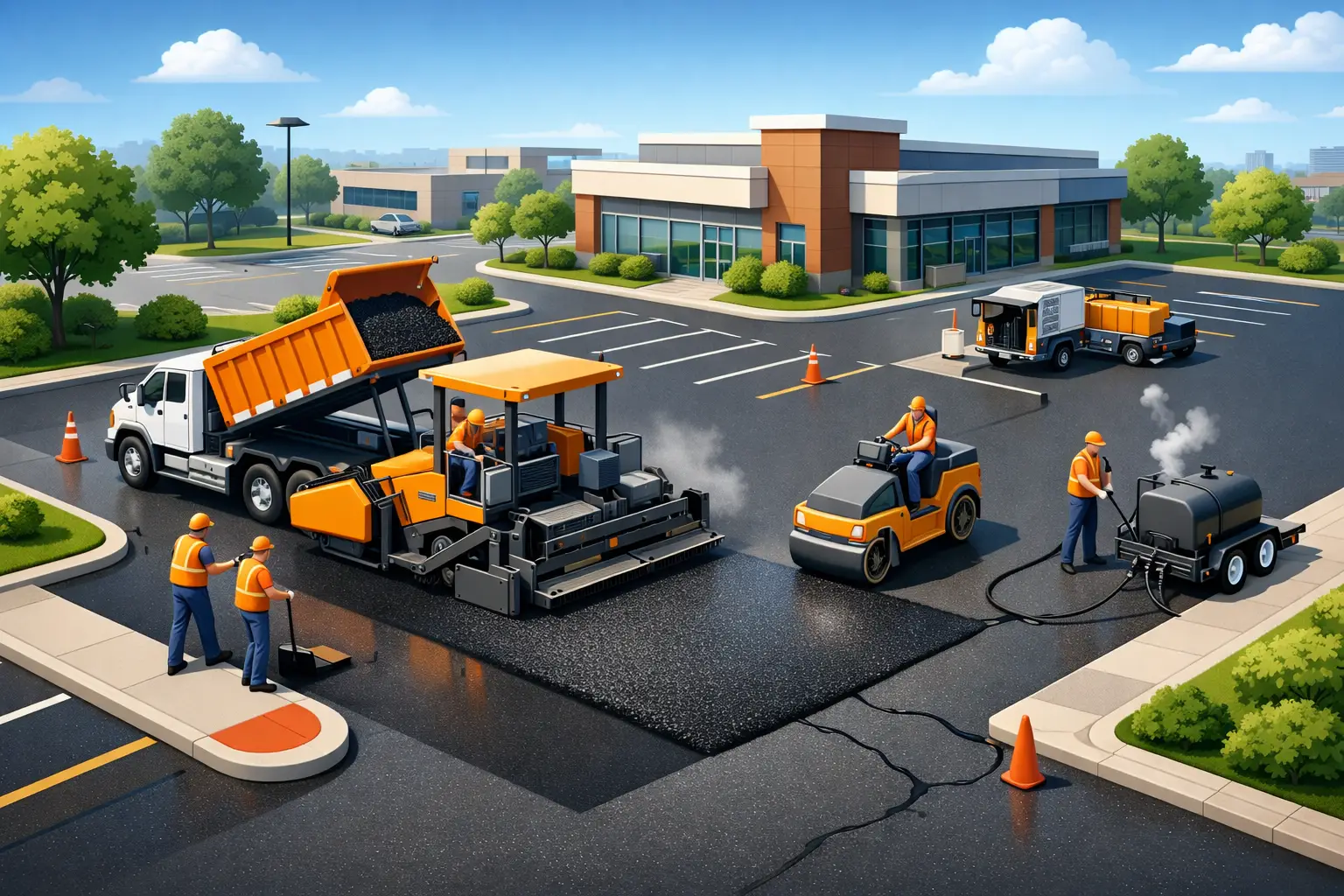
A parking lot starts speaking long before it fails. Faded striping, loose gravel, puddles near the entrance, and small cracks around curbs all tell customers, tenants, and employees that the pavement needs attention. Commercial asphalt maintenance services help business owners and property managers handle those early signs before they become expensive repairs, safety concerns, or a full replacement project.
For a commercial property, asphalt is not just a surface to drive on. It directs traffic, supports deliveries, creates accessible parking, and shapes the first impression of the building. Keeping it in good condition is usually more affordable than waiting for visible damage to spread.
What commercial asphalt maintenance includes
Maintenance is not one single service. The right plan depends on the age of the pavement, the amount of traffic it handles, drainage conditions, and the damage already present. A small office lot with steady employee parking has different needs than a busy retail center receiving deliveries throughout the day.
Most commercial asphalt maintenance work includes crack repair, patching, sealcoating, drainage attention, and pavement marking when needed. The goal is straightforward: keep water out of the asphalt base, repair weak areas before they expand, and preserve a clean, safe surface for everyone using the property.
Crack sealing and repair
Cracks are often the first visible warning sign. Asphalt naturally expands and contracts through seasonal temperature changes. Over time, traffic, sun exposure, and water create openings in the surface.
A narrow crack may not look urgent, but it gives rainwater a path below the pavement. Once water reaches the base, it can soften the material supporting the asphalt. That is when a simple crack can turn into a broken edge, pothole, or larger section that needs patching. Addressing cracks early is one of the most cost-effective maintenance decisions a property owner can make.
Patching damaged areas
Patching is used where asphalt has already weakened or broken apart. This may include potholes, alligator cracking, sinking sections, failed edges, or areas damaged by heavy vehicles.
A quality patch starts with removing failed material, preparing the base when necessary, and installing new asphalt that is properly compacted. Simply filling a hole without dealing with the soft or unstable material underneath may provide a short-term improvement, but the problem can return quickly. A contractor should look at the reason for the failure, not just the visible hole.
Sealcoating for protection and appearance
Sealcoating places a protective coating over sound asphalt. It helps reduce damage from sunlight, moisture, vehicle fluids, and normal wear while giving the pavement a darker, more uniform appearance.
It is not a fix for deep cracks, major depressions, or failing asphalt. Those repairs should come first. But for pavement that is structurally sound, sealcoating can extend its useful life and make a commercial property look cared for. Timing matters too. A newly paved lot needs time to cure before it is sealed, while an older lot should be evaluated before the surface becomes too worn to protect effectively.
Why waiting costs more
The biggest mistake in asphalt care is treating maintenance as optional until customers start complaining. By then, the work may have moved beyond sealing and minor repairs.
Water is usually the main reason. It enters through cracks, sits in low areas, and weakens the base below the surface. During colder periods, freeze and thaw cycles can make that damage worse. On Long Island, changing weather and regular traffic can be hard on commercial pavement, especially around entrances, dumpster pads, loading zones, and curbs.
Neglected pavement can also create avoidable liability concerns. Uneven surfaces, potholes, standing water, and poorly visible parking spaces make it harder for people to move safely through the property. That matters for employees carrying materials, customers walking from their cars, delivery drivers, and visitors with mobility needs.
Appearance has a practical value as well. A clean, smooth lot with visible markings makes a property easier to use. It can also help a storefront, office building, apartment complex, or managed property look more professional before anyone walks through the door.
Signs your property needs asphalt attention
A regular walk-through can catch issues before they become major projects. Pay close attention after heavy rain, after winter weather, and in high-traffic areas where vehicles turn, stop, or carry heavier loads.
Watch for these common signs:
- Cracks that are widening, branching, or collecting debris
- Potholes, crumbling edges, or loose pieces of asphalt
- Puddles that remain after normal drying time
- Faded, gray pavement that looks dry or worn
- Tire marks, depressions, or sinking near drains and entrances
- Parking lines and directional markings that are hard to see
Not every crack means the entire lot needs replacement. That is why an honest evaluation matters. In some cases, targeted repairs and sealcoating are enough. If the base has failed across a large area, resurfacing or replacement may be the better investment. The right answer depends on the condition below the surface as much as what can be seen from above.
Build a maintenance plan around your property
Commercial properties work on schedules. A restaurant may need its lot available during peak meal hours. A medical office may need clear access for patients. An apartment community may need to phase work so residents can still park. Good planning keeps the project organized and reduces disruption.
Start by identifying the pavement areas that take the most abuse. Entrances, drive lanes, loading areas, dumpster locations, and spots near drainage structures often need attention first. Then consider how work can be scheduled around the business. Some repairs can be phased by section, while sealcoating and striping may be best done during lower-traffic periods.
There is no single schedule that fits every property. Many lots benefit from annual inspections, prompt crack repair, and periodic sealcoating based on surface condition and traffic. A lightly used lot may go longer between services than a busy commercial center. What matters is having a plan before damage forces an emergency decision.
Do not overlook drainage
Drainage deserves special attention because standing water does more than make a lot inconvenient. It can point to low spots, clogged drainage areas, damaged pavement, or a base that is beginning to settle.
A contractor should assess where water is collecting and why. Sometimes the solution is localized asphalt repair. In other cases, the surrounding grade or drainage structure needs to be addressed. Applying sealcoat over an area that continually holds water will not solve the underlying problem.
Keep striping visible and useful
Fresh pavement repairs and sealcoating are a good time to evaluate markings. Clear parking stalls, arrows, fire lanes, loading zones, and accessible spaces help traffic move predictably through the property.
Striping should reflect how the lot is actually used, not just how it looked years ago. If delivery traffic has changed, parking demand has shifted, or an entrance has become congested, updating the layout may make the property safer and easier to navigate. Any required accessible markings should be planned carefully for the specific site.
Choosing a contractor for commercial asphalt maintenance services
Commercial work needs more than a crew that can apply asphalt. Property owners need clear communication, dependable scheduling, and a contractor who understands that access to the building matters every day.
Ask how the damaged areas will be prepared, whether the crew will inspect drainage and the base condition, and how the work will affect traffic and parking. A clear estimate should explain the scope of work in plain language so you understand what is being repaired and why. The lowest number is not always the best value if important preparation is skipped.
For Long Island businesses and managed properties, Big Apple Paving and Remodeling focuses on practical service: showing up on time, explaining the work clearly, and providing quality results at a fair price. Whether the project calls for repairs, sealcoating, or a larger paving solution, a free estimate gives you a useful starting point without pressure.
A well-maintained lot does not need to look brand new every day. It needs to be safe, functional, and cared for before small problems turn into bigger ones. A quick inspection now can help you plan repairs on your terms, protect your budget, and keep the front of your property ready for the people who rely on it.