
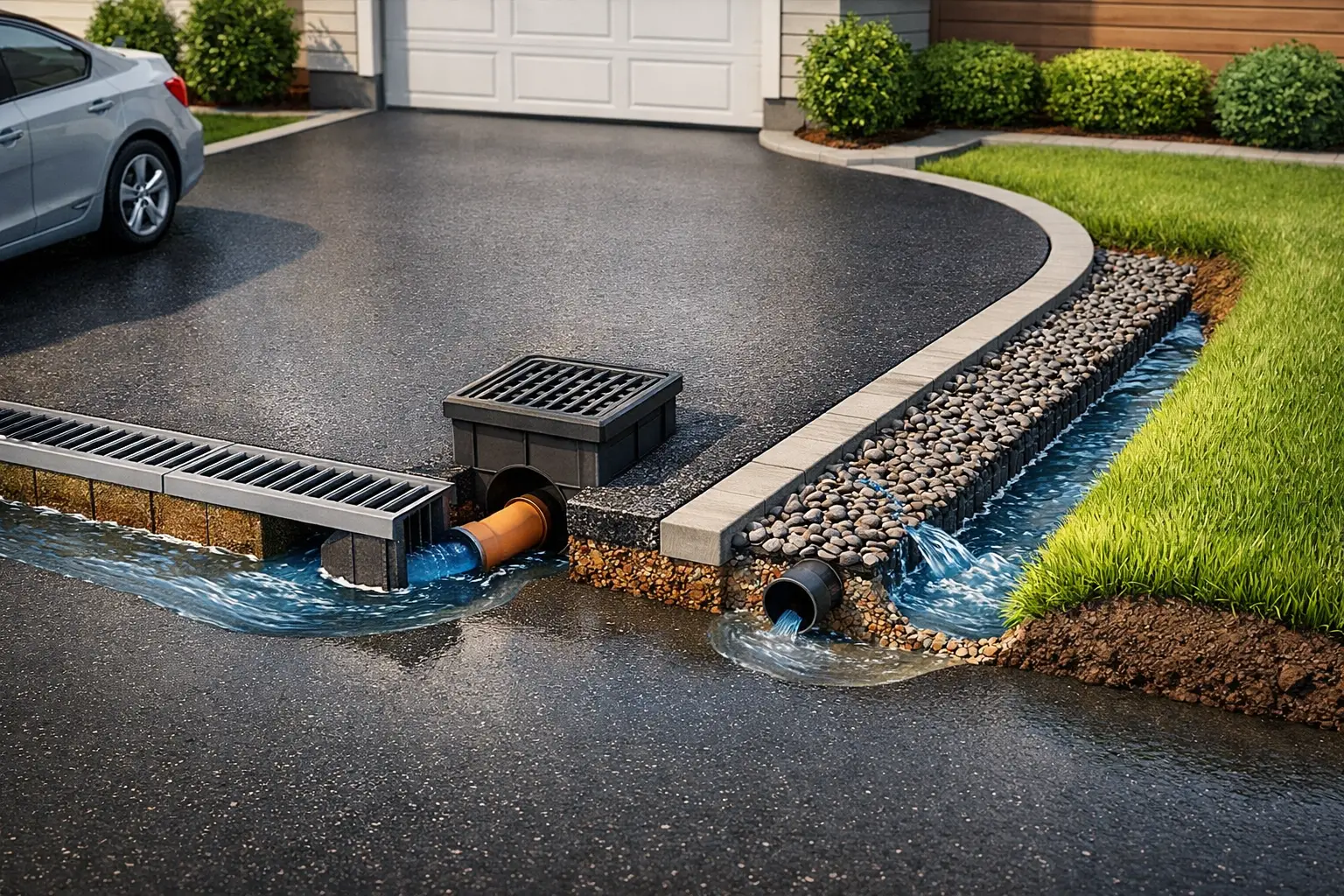
A puddle that sits on an asphalt driveway after every rainstorm is not just an annoyance. Water works its way into small openings, softens the base below, and can turn a minor surface issue into cracking, potholes, or sinking. The right driveway drainage solutions for asphalt keep water moving away from the pavement before it has time to cause expensive damage.
For Long Island homes and commercial properties, drainage deserves attention before installing new asphalt, sealing an existing surface, or patching visible damage. Our heavy rain, freeze-thaw weather, and often-flat lots can all make driveway water problems worse. The best fix depends on where the water starts, where it needs to go, and what condition the driveway is already in.
Why Water Damages Asphalt Driveways
Asphalt is built to handle traffic, but it needs a solid, dry base to do its job. When water runs across the surface properly, it drains off without causing much trouble. When it ponds, seeps into cracks, or collects along the driveway edges, it can weaken the structure below.
In winter, trapped water freezes and expands. That movement widens existing cracks and can lift sections of pavement. When the ground thaws, the loosened area may settle unevenly. A driveway that once had a small low spot can quickly develop alligator cracking, edge deterioration, or a pothole.
Water can also wash away soil at the sides of the driveway. This leaves unsupported asphalt edges that break apart under the weight of cars, delivery trucks, or garbage trucks. Proper drainage protects both the pavement surface and the base that supports it.
Start by Finding Where the Water Is Going
Before choosing a drain or adding more asphalt, watch the driveway during a steady rain. Look for standing water, water flowing toward the garage, runoff crossing a walkway, and soft or muddy spots along the edges. The visible puddle is not always the whole problem. A clogged gutter, downspout that empties onto the driveway, or yard slope may be sending too much water toward the asphalt.
A driveway should generally slope gently away from the house and toward a safe drainage area. The goal is not to rush water onto a neighbor’s property, a sidewalk, or the street in a way that creates a hazard. It is to direct water where it can drain safely based on the layout of the property.
If puddles only appear in one small area, a localized repair may be enough. If water runs toward the garage or remains across a large section of the driveway, the pavement grade, base, or surrounding landscape may need more substantial work.
Driveway Drainage Solutions for Asphalt That Work
Correcting the Asphalt Slope
Proper grading is often the most effective drainage solution because it addresses the reason water is pooling. A driveway with the right pitch sheds water naturally rather than relying on a drain to handle every storm.
For a new driveway, grading should be planned before the asphalt is installed. The base material is shaped and compacted to create a consistent slope, then the asphalt follows that grade. For an older driveway, the fix may involve removing and replacing a low section, resurfacing with corrected pitch, or rebuilding areas where the base has failed.
Adding asphalt over a puddle without checking the slope can be a short-term patch. It may raise the low spot, but it can also create a new drainage issue somewhere else or leave weakened material underneath.
Channel Drains Near Garages and Low Areas
A channel drain, sometimes called a trench drain, is useful where water repeatedly collects at a garage entrance, the bottom of a sloped driveway, or another fixed low point. It is a narrow drain set into the pavement with a grate across the top. Water enters the grate and flows through a connected pipe to an approved discharge area.
This option can work very well, but installation matters. The drain must sit at the proper height, have a dependable outlet, and be set securely so vehicle traffic does not loosen it. A channel drain without a clear place for the water to go simply moves the problem underground.
Catch Basins for Larger Runoff Areas
Catch basins collect water from a wider area and are commonly used on commercial lots, larger driveways, and properties with significant runoff. They are usually installed at low points, with a grate that catches leaves and debris before water enters the drainage piping.
They require occasional cleaning, especially in areas with mature trees. A clogged basin will not protect the asphalt, so routine maintenance is part of the solution. For properties where several parking spaces or long drive lanes drain toward one area, a basin may be more practical than trying to regrade every section.
Swales and Landscape Drainage Along the Edges
Not every water issue needs a drain installed through the asphalt. A shallow swale along the side of the driveway can guide runoff away from the pavement and toward a suitable part of the yard. This is often a good option when the driveway has enough room at the edges and the property already has a natural direction for drainage.
French drains can also help in certain situations. These underground systems use gravel and perforated pipe to collect water moving through the soil. They are more useful for wet ground and water along driveway edges than for heavy surface pooling in the middle of the asphalt.
The trade-off is that landscape drainage needs space and a reliable outlet. It also should not undermine the driveway base. If erosion is already occurring, the edge may need to be rebuilt and supported before a swale or drain is added.
Downspout Extensions and Gutter Adjustments
Sometimes the easiest improvement is keeping roof runoff off the driveway. A downspout that empties beside the asphalt can saturate the base and create a recurring low spot. Extensions or buried downspout piping can move water away from the driveway, foundation, and walkways.
This is especially worthwhile before sealcoating or repairing cracks. There is little value in sealing a driveway surface if a nearby downspout continues sending gallons of water to the same damaged area during every storm.
Do Not Let Surface Repairs Hide a Drainage Problem
Crack filling and sealcoating are smart maintenance steps for an asphalt driveway, but neither replaces drainage correction. Crack filler helps block water from entering narrow openings. Sealcoating renews the protective surface and improves curb appeal. Both work best after standing water and runoff problems have been addressed.
Watch for a few clear warning signs: puddles that remain more than a day after rain, cracks that return in the same location, crumbling driveway edges, water entering the garage, or tire marks and depressions in one area. These signs often point to a drainage or base problem, not just aging asphalt.
For extensive settling, repeated potholes, or water that moves toward a building, it is worth having the site evaluated before authorizing a surface-only repair. A dependable contractor should explain what is causing the issue, what work is necessary, and where the water will go after the job is complete.
Choose the Right Fix for Your Property
The most affordable drainage option is not always the lowest upfront price. Extending a downspout may solve a simple runoff issue quickly. Regrading and replacing a failed section costs more, but it can prevent repeated patching and protect the driveway for years. A channel drain may be the right call at a garage entrance, while a swale may make more sense on a wide residential lot.
Big Apple Paving and Remodeling helps Long Island property owners look beyond the surface so repairs, paving, and sealing work hold up as they should. Clear recommendations, timely service, and a free estimate make it easier to decide which repair fits the driveway and the budget.
If water is sitting on your asphalt now, take a few photos after the next rainfall and note how long the area stays wet. That simple information can help identify whether the driveway needs a small drainage adjustment or a more lasting correction before the damage spreads.