A driveway can be freshly paved and still look unfinished if its edges are weak, uneven, or crumbling into the lawn. Choosing the best driveway edge options gives asphalt a cleaner border, helps control wear at the sides, and creates the finished curb appeal homeowners want without making the job more complicated than it needs to be.
For Long Island properties, the right choice usually comes down to how you use the driveway, the look of the home, drainage conditions, and the amount of maintenance you are willing to take on. A busy family driveway needs something different from a decorative front entrance or a commercial lot with regular vehicle traffic.
Why driveway edges deserve attention
The outer few inches of an asphalt driveway take more abuse than most people realize. Cars pulling over too far, delivery trucks, lawn equipment, snow shovels, and water runoff can all break down unsupported asphalt edges. Once an edge begins to crack, the damage can spread inward and make a small repair turn into a larger paving project.
A good edge does not make asphalt indestructible, but it provides support and a clear boundary between the drive and the surrounding landscaping. It can also keep gravel, mulch, soil, and grass from creeping onto the pavement. The result is a driveway that is easier to maintain and looks intentional from the street.
The best driveway edge options to consider
There is no single best material for every property. The right answer depends on whether your priority is durability, appearance, budget, drainage, or a combination of all four.
Asphalt edge with a compacted gravel base
For a straightforward, budget-conscious driveway, a properly installed asphalt edge over a solid compacted base is often the practical choice. The asphalt runs to a clean edge, while compacted gravel beneath and beside it supports the pavement and reduces the chance of edge cracking.
This is a good option for homeowners who want a neat driveway without adding decorative stone or pavers. It is especially sensible when the driveway has broad curves, a long run, or an irregular layout where installing individual edging units would add labor and cost.
The trade-off is that it does not create the same visual contrast as masonry. The asphalt edge may still need occasional repair if vehicles repeatedly drive onto the lawn or shoulder. Keeping a stable gravel shoulder and avoiding heavy loads near the edge will help it last longer.
Belgian block edging
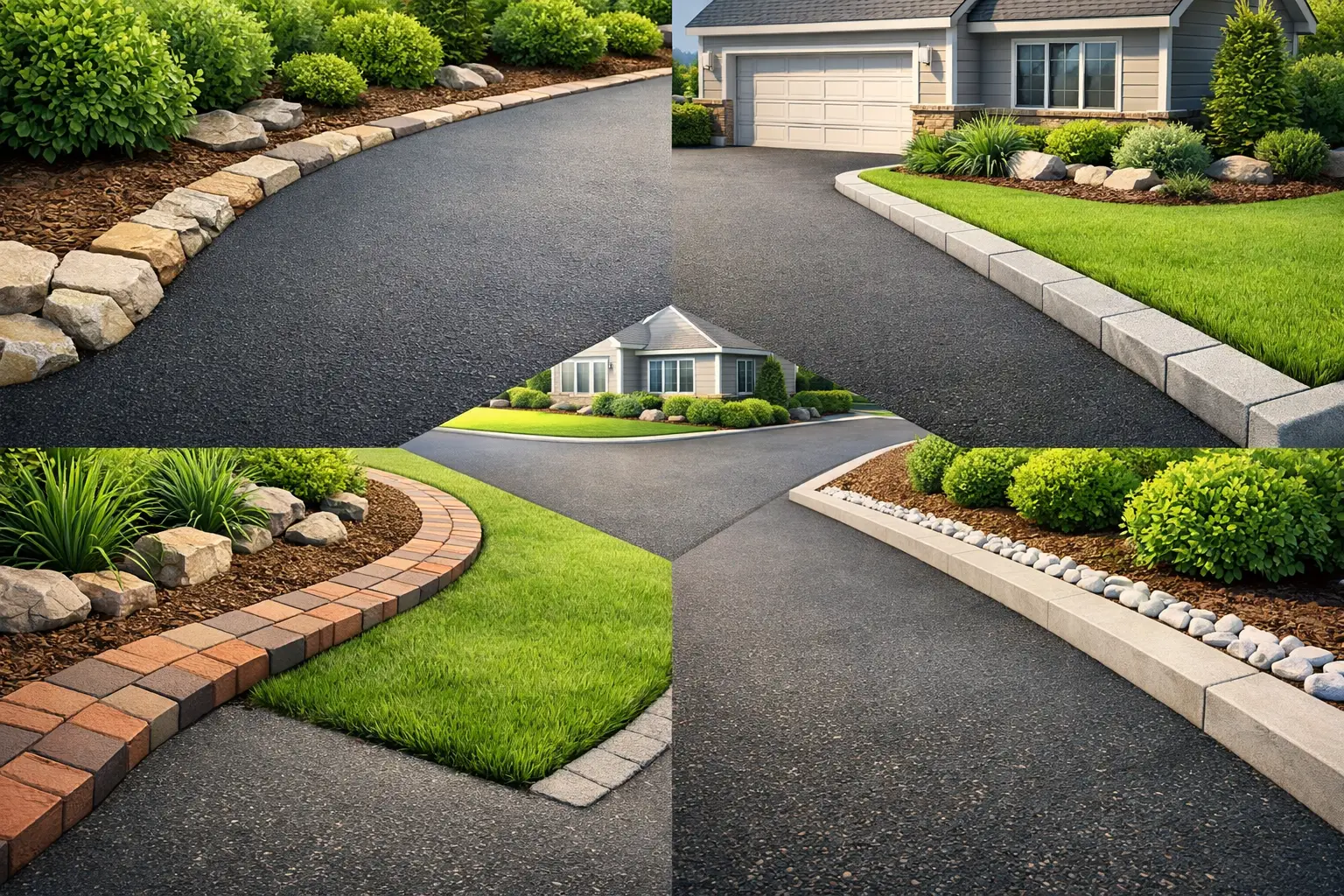
Belgian block is one of the most popular driveway borders on Long Island for good reason. These substantial stone blocks create a strong, classic frame around asphalt and work well with traditional, colonial, and newer homes alike. They are often installed along both sides of the driveway, at the driveway entrance, or around a curved apron.
Beyond appearance, Belgian block can provide physical support at the edge of the asphalt. It creates a visible boundary that encourages drivers to stay on the paved surface and helps keep landscaping separate from the driveway.
Installation matters here. The blocks need a properly prepared base and secure setting so they do not shift with traffic, weather, or freeze-thaw movement. Stone edging can cost more than a simple asphalt edge, but it offers a polished result that holds up well when installed correctly.
Concrete curb edging
Concrete curbing creates a defined, durable border and can be formed to match the shape of the driveway. It works particularly well where a property needs more structure, such as along a sloped area, near a planting bed, or beside a parking section that sees frequent traffic.
For commercial properties and multi-car residential driveways, a concrete curb can provide a clear separation between pavement and landscaping. It is also useful where runoff needs to be directed away from a garage, walkway, or low spot.
Concrete is not always the best fit for every driveway. A tall curb may look too formal or make opening car doors and stepping out less convenient in a narrow drive. It also needs proper planning for drainage. Water should be guided toward an appropriate outlet, not trapped along the pavement edge.
Paver borders
A paver border gives a driveway a more decorative, custom look. Brick-style pavers, concrete pavers, and natural stone pavers can be arranged in straight lines, curves, or patterns that complement a front walkway, patio, or retaining wall.
This option is a strong choice when curb appeal is the main goal and you want the driveway to tie into other hardscape features. A darker asphalt surface bordered by contrasting gray, tan, or red-toned pavers can make the driveway entrance stand out without repaving the entire area in a premium material.
Paver borders require careful base preparation. If the ground underneath is not stable, the pavers can settle or shift over time. They may also need occasional resetting, joint sand replacement, or weed control. That extra upkeep is worth considering before choosing a detailed border for a large driveway.
Cobblestone edging
Cobblestone offers a more textured, old-world appearance than uniform Belgian block. It can be an excellent match for historic-style homes, stone facades, and properties with established landscaping. Because the stones vary in shape and surface texture, cobblestone edging looks less formal and more natural than a crisp concrete curb.
It is durable, but it is also more labor-intensive to install. Each stone needs to be set securely so the border remains level and does not become a tripping point near walkways or driveway entrances. This is generally a higher-cost choice, but it can add real character to the property.
Metal or plastic landscape edging
Thin metal, vinyl, or plastic edging is sometimes used to create a visual line between a driveway and a flower bed. These materials can be useful for landscaping, but they are not a structural solution for an asphalt driveway.
They may bend, crack, or pull loose if tires run over them, and they will not prevent asphalt edges from breaking down under vehicle weight. Use this type of edging for light-duty garden separation, not as the primary border for a driveway that sees regular traffic.
Match the edge to the way your driveway is used
Before selecting a border, think about who drives on the surface and where they drive. A narrow driveway where cars often pull to the side needs more protection than a wide driveway with plenty of room to turn. If garbage trucks, moving trucks, landscaping equipment, or commercial vehicles use the property, edge support becomes even more important.
Drainage should also be part of the decision. Water that runs off a driveway and sits along the sides can soften the ground, undermine the base, and lead to cracks. In some situations, the best improvement is not a decorative border at all. It may be correcting the driveway pitch, adding a properly planned drainage solution, or rebuilding a weak base before installing the finished edge.
For properties with snow removal, keep the plow route in mind. Low, sturdy stone borders are easier to work around than fragile edging. Clearly visible blocks or curbs can also help prevent damage when snow is pushed to the sides of the driveway.
What affects the cost of driveway edging?
Material is only one part of the price. The length of the driveway, the number of curves, excavation needs, base preparation, drainage work, and access to the job site all affect the final estimate. A simple straight border installed during a new driveway project is usually more affordable than adding detailed pavers to an existing driveway with damaged edges.
It can be smart to combine edge work with driveway installation, replacement, or repairs. The crew can prepare the base, set the border, and finish the asphalt as one coordinated project. That often produces a cleaner result than adding edging later after the driveway has already started to wear.
Keep the edge in good shape
Once the work is complete, small habits make a difference. Avoid parking with tires hanging off the asphalt, keep heavy equipment away from unsupported edges, and do not let soil or mulch build up against the driveway. If you notice a crack, low spot, or loose block, address it early before water gets below the surface.
Asphalt sealcoating can also help protect the paved portion of the driveway from weather and everyday wear when the pavement is in suitable condition. It will not fix a failing base or major cracks, but it is a useful part of regular driveway maintenance.
A driveway border should fit the property instead of competing with it. Whether you choose simple supported asphalt, classic Belgian block, concrete curbing, or a custom paver frame, the best result starts with a stable base and careful installation. For homeowners who want clear advice and fair pricing, Big Apple Paving and Remodeling can look at the condition of the driveway, explain the practical options, and provide a free estimate for a finished edge that looks right for the home.