A driveway can look fine from the street while hiding the problems that cause early cracks, puddles, and crumbling edges. That is why residential asphalt driveway paving is about much more than putting down a fresh black surface. The work below the asphalt – grading, drainage, base preparation, and proper compaction – has a major effect on how the finished driveway performs through Long Island weather.
For homeowners, the goal is straightforward: a clean, smooth driveway that improves curb appeal, handles daily traffic, and stays within a reasonable budget. Knowing what a quality paving job should include makes it easier to plan the project and choose a contractor who will do the work right.
Start With the Condition of Your Existing Driveway
Not every worn driveway needs the same solution. A driveway with light surface cracking, fading, or minor rough spots may be a good candidate for repairs and asphalt sealing. Sealing protects the asphalt from water, sun, oil, and normal wear, but it cannot correct a failed base underneath.
If there are widespread alligator cracks, deep potholes, soft areas, standing water, or sections that have sunk, a more substantial paving project may be the better investment. Paving over a driveway with serious base problems can improve the appearance for a while, but the same damage often returns because the cause was never fixed.
A good estimate should begin with an honest look at the existing surface, the edges, and the way water moves across the property. There is no benefit in paying for a full replacement when a repair is enough. On the other hand, choosing the cheapest surface-only fix for a driveway that is breaking down underneath can cost more in the long run.
What Residential Asphalt Driveway Paving Includes
The exact scope depends on the driveway’s condition, but a proper project usually begins with preparing the site. Old asphalt may need to be removed, especially if it is badly cracked, uneven, or holding water. In some cases, a stable existing surface can be used as part of the base for an overlay. That decision should be based on site conditions, not a one-size-fits-all sales pitch.
Grading and Drainage Come First
Water is one of asphalt’s biggest enemies. It can work its way into cracks, weaken the base, and freeze during cold weather. When it freezes, it expands. When it thaws, it can leave behind gaps and soft spots that lead to more cracking.
The driveway should be graded so water moves away from the home, garage, and low areas where it can collect. This does not always mean a steep slope. It means creating a controlled path for runoff while keeping the driveway comfortable to drive on and practical for the property. If drainage is ignored, even new asphalt can develop problems sooner than expected.
A Solid Base Supports the Surface
The base is the foundation of the driveway. Once the ground is prepared and graded, crushed stone or another suitable aggregate base is installed and compacted. This layer helps support vehicle weight and provides stability beneath the asphalt.
Base work matters even more for driveways that see heavier use, such as multiple family vehicles, work vans, delivery traffic, trailers, or trucks. A driveway used only by passenger cars may not need the same build as one serving a busy rental property or a home-based business. The right approach depends on how the driveway will actually be used.
Asphalt Is Installed and Compacted
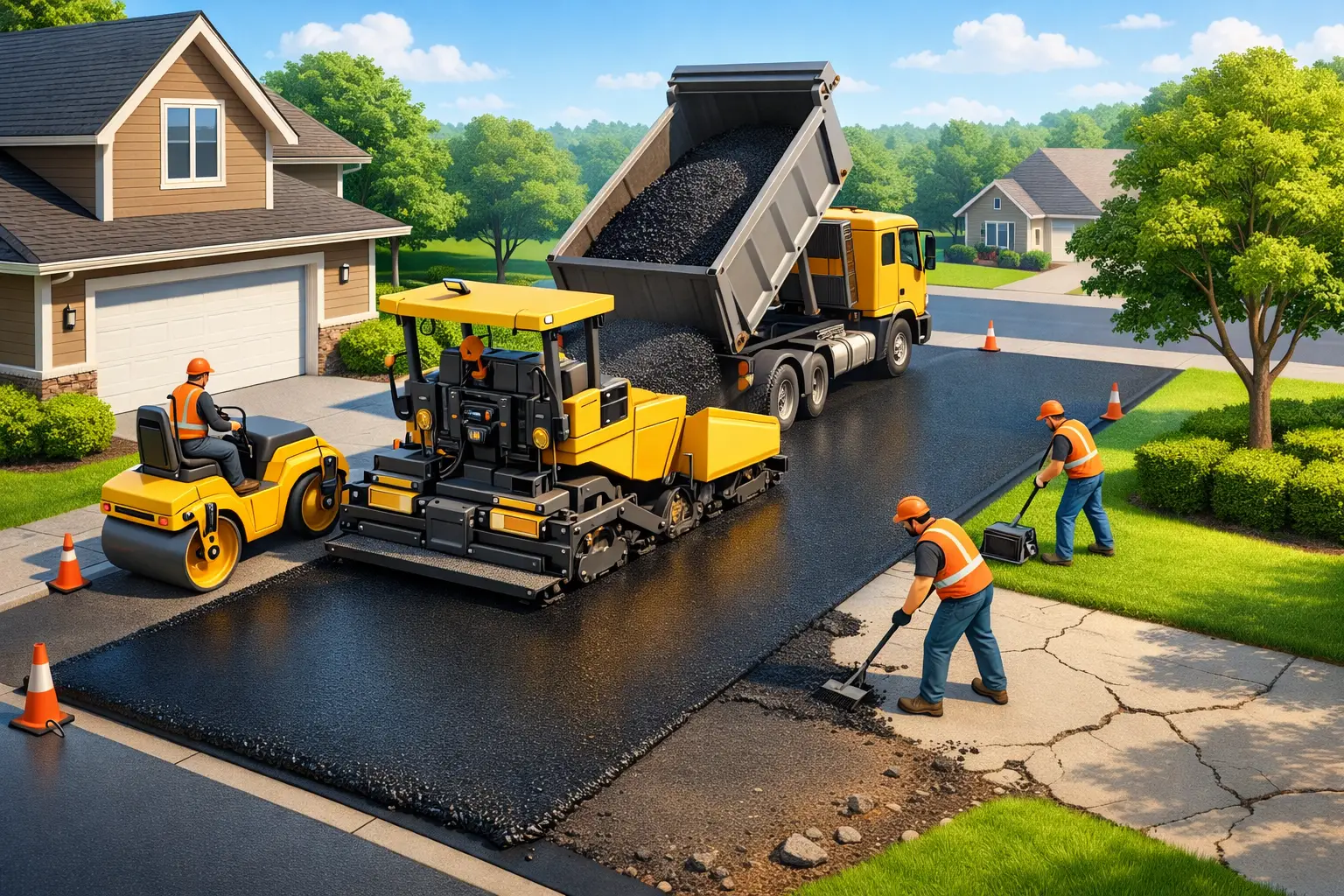
After the base is ready, hot asphalt is spread to the planned thickness and compacted for a smooth, dense surface. Good compaction helps limit water penetration and creates the finished appearance homeowners expect.
Edges deserve attention, too. Asphalt edges are naturally more vulnerable because they do not have support beyond the driveway line. Clean, properly shaped edges improve the look of the job, while a strong base beneath them helps reduce breakage. Some properties also benefit from edging, drainage improvements, or a wider turnaround area, depending on the layout.
Planning Around Long Island Conditions
Long Island driveways deal with hot summer sun, rain, freeze-thaw cycles, road salt, and occasional heavy storms. Those conditions are hard on any paved surface, especially when water is allowed to sit near cracks or along the edges.
Timing can also affect the project. Asphalt needs suitable weather for installation and compaction, so rainy days and cold conditions may require scheduling adjustments. A dependable contractor should communicate clearly about timing rather than rushing a job in weather that could affect the result.
Homeowners should also think about access before work begins. Cars, trailers, basketball hoops, planters, and other items need to be moved from the driveway area. If the driveway is the only way in and out of the garage, plan ahead for where vehicles will be parked during installation and initial curing. A little preparation helps the job move quickly and keeps the crew focused on the paving.
How Long Before You Can Use a New Driveway?
Fresh asphalt needs time to cool and cure. In many cases, homeowners can walk on it relatively soon, but vehicles should stay off it for the period recommended by the paving contractor. Weather, asphalt thickness, shade, and outside temperatures can all affect that timing.
Even after vehicles return, it is smart to treat the new driveway carefully during its first months. Avoid turning the steering wheel sharply while sitting still, especially in hot weather. Try not to park heavy equipment or trailers in the exact same place for long periods. Motorcycle kickstands, narrow trailer supports, and heavy dumpsters can leave impressions on newer asphalt unless they are supported with a board.
Asphalt continues to harden over time, so patience early on helps protect the investment. Your contractor should provide clear instructions for your specific driveway instead of giving vague advice.
Protecting Your Asphalt After Installation
A new driveway is not maintenance-free, but the upkeep is manageable. Keep it clean, address oil or fuel spills promptly, and watch for cracks as they appear. Small cracks are easier and less expensive to repair before water gets below the surface.
Asphalt sealing is also part of long-term care. The right timing for sealcoating depends on the age and condition of the driveway, so it should not be rushed immediately after installation. Once the asphalt has had time to cure, a quality sealcoat can refresh the color and add protection against moisture, UV exposure, and everyday wear.
Keep heavy loads away from the edges when possible. If water starts pooling in a new or older driveway, do not ignore it. A drainage issue can be easier to correct before it damages the base or reaches the foundation of the home.
Questions Worth Asking Before You Hire a Paving Contractor
A clear conversation before the job starts can prevent surprises later. Ask whether the existing asphalt will be removed or overlaid, how the base will be handled, and how drainage will be addressed. Confirm what areas are included, such as the driveway apron, borders, cleanup, and disposal of old material.
It is also reasonable to ask about the planned paving thickness and whether the crew will compact the asphalt properly. You do not need to be a paving expert to ask direct questions. A contractor who values quality work should be comfortable explaining the plan in plain language.
Price matters, but it should be considered alongside preparation, materials, workmanship, and reliability. An estimate that seems unusually low may leave out important site work. The best value is a driveway that is installed correctly, looks good, and does not need major repairs soon after the crew leaves.
For homeowners in Kings Park and nearby Long Island communities, Big Apple Paving and Remodeling takes a practical, customer-first approach: show up on time, explain the work clearly, and deliver a driveway built for the property. Before committing to any paving project, request an estimate, walk the site with the contractor, and make sure the plan addresses the water, base, and traffic conditions your driveway faces every day.