A driveway can look smooth and freshly black on day one, then develop low spots, cracks, or tire marks far sooner than expected. In many cases, the problem is not the asphalt color or the weather. It is what was installed underneath it. If you are asking how thick should a residential asphalt driveway be, the right answer depends on the traffic it will carry and the condition of the ground below.
For most Long Island homes, a properly built driveway needs more than a thin layer of asphalt spread over existing soil. A strong base, correct drainage, and enough asphalt thickness work together to support daily use through hot summers, freezing temperatures, rain, and snow.
The Short Answer on Residential Driveway Thickness
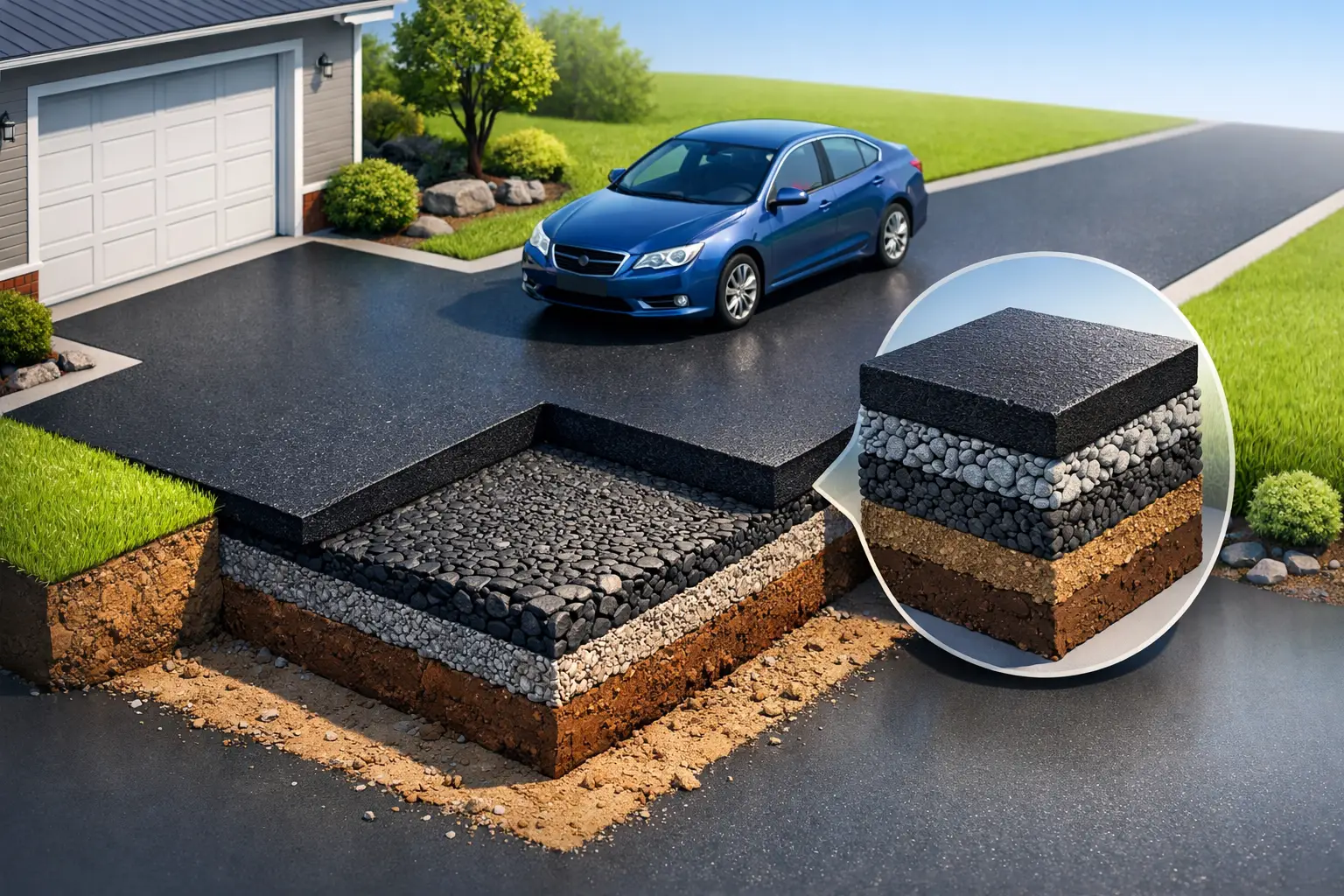
A standard residential asphalt driveway should usually have 2 to 3 inches of compacted asphalt over a 4- to 6-inch compacted crushed stone base. That is a dependable starting point for a driveway used by cars, SUVs, pickups, and normal household traffic.
The word “compacted” matters. Asphalt is measured before and after it is rolled. A contractor may install more material initially so that, after compaction, the finished asphalt layer reaches the proper thickness. A driveway that is only 1 to 1 1/2 inches thick after compaction may look fine at first, but it is more likely to crack and wear down early.
For a typical home, 2 inches of compacted asphalt can work when the base is in excellent condition and the driveway sees light traffic. For better long-term value, especially on a full replacement, 2 1/2 to 3 inches is often the safer choice.
Asphalt Thickness Is Not the Whole Structure
Homeowners sometimes focus on the visible asphalt layer because that is what they can see. But the base does most of the heavy lifting. The crushed stone base spreads vehicle weight across the soil and helps move water away from the pavement.
Putting thick asphalt over soft, wet, or poorly prepared ground is not a lasting fix. On the other hand, a well-compacted base with properly installed asphalt creates a driveway that holds its shape and resists premature cracking. A good paving job is built from the ground up.
How Thick Should a Residential Asphalt Driveway Be for Your Home?
The right thickness changes with how you use the driveway. A quiet driveway that holds two sedans has different needs than one used by multiple vehicles, delivery trucks, work vans, or a heavy pickup every day.
Standard Household Use
For normal residential traffic, 2 to 3 inches of compacted asphalt over 4 to 6 inches of compacted stone is generally appropriate. This is the most common setup for single-family homes and provides a good balance between affordability and durability.
If an older driveway already has a stable stone base and only needs resurfacing, an asphalt overlay may be possible. In that case, the overlay is commonly around 1 1/2 to 2 inches after compaction. However, an overlay is not the right answer when the existing pavement has major cracks, sinking areas, drainage problems, or a weak foundation.
Heavy Vehicles and Higher Traffic
A driveway used regularly by heavy-duty pickups, work vehicles, trailers, large delivery vehicles, or several cars should be built thicker. Consider 3 inches or more of compacted asphalt with a deeper stone base, often 6 inches or greater depending on soil conditions.
This is also worth discussing if a driveway leads to a detached garage, backyard parking area, or space where dumpsters, moving trucks, or service vehicles are likely to travel. Adding strength during installation is usually far less expensive than repairing ruts or failed sections later.
Soft Soil and Drainage Concerns
Long Island properties can have very different soil conditions from one neighborhood to the next. Sandy ground, clay-heavy soil, areas with poor drainage, and land that stays wet after rain may need more excavation, a thicker base, or stabilization before paving begins.
Water is one of asphalt’s biggest enemies. When water gets below the pavement and freezes, it can shift the base and create cracks or depressions. A driveway should be graded so water drains away rather than pooling along the edges, near the garage, or at the bottom of the slope.
Why the Crushed Stone Base Matters So Much
A proper stone base is not just filler. It is the support system for the driveway. Before the stone goes down, the soil should be graded and compacted. Then the stone base is installed in layers and compacted so it becomes dense and stable.
For many residential driveways, 4 to 6 inches of compacted crushed stone is enough. Sites with poor soil, heavy traffic, or drainage concerns may need additional base material. A contractor should evaluate the condition of the existing driveway, the slope of the property, and whether the ground has settled before recommending a final depth.
Skipping base preparation can create problems that no sealcoat or patch can truly solve. You may see alligator cracking, where the surface breaks into a web-like pattern, or wheel ruts where vehicles repeatedly travel. Those signs usually point to failure below the asphalt, not simply an aging surface.
Installation Details That Protect Your Driveway
Thickness is essential, but a few other details determine whether the finished driveway performs as it should. The surface should have the correct pitch for drainage. The edges need support, particularly where vehicles may pull off the pavement. The asphalt should also be placed and compacted while it is at the right temperature.
A driveway may need a slightly stronger edge or a wider turning area if cars frequently back out, turn around, or park near the side. These high-stress spots are often where cracks begin first. It is smart to address them during the paving plan rather than wait for a repair need.
New asphalt also needs time to cure. You can normally walk on it sooner, but it is best to limit heavy traffic at first and avoid sharp turns while the surface is still soft. During warm weather, motorcycle kickstands, furniture legs, and parked trailers can leave impressions if the asphalt has not fully hardened.
When an Overlay Makes Sense and When It Does Not
An asphalt overlay can be a cost-effective option when the current driveway has a solid foundation and only surface-level wear. The paving crew repairs minor cracks or damaged areas, prepares the surface, and installs a new asphalt layer over it.
But overlays cannot correct a failing base. If the driveway is sinking, heaving, holding water, or covered in deep alligator cracks, the better investment is usually removal and replacement. That allows the contractor to rebuild the base, correct drainage, and install the proper asphalt thickness from the start.
A straightforward inspection can prevent a homeowner from paying for an overlay that only hides a larger issue for a short time.
Get a Thickness Recommendation Based on the Property
There is no one-size-fits-all number that works for every driveway. The best recommendation comes after looking at the existing pavement, soil, drainage, expected vehicle weight, and whether the project is a new installation, replacement, or overlay.
For homeowners across Long Island, Big Apple Paving and Remodeling can evaluate those practical details and provide a clear, affordable estimate. The goal is not to sell more material than a driveway needs. It is to build a surface with the right support so it stays safe, attractive, and dependable for years.
Before approving any paving work, ask what thickness will remain after compaction, how deep the stone base will be, and how water will drain from the finished driveway. Clear answers to those questions are a good sign that the work is being planned to last.