
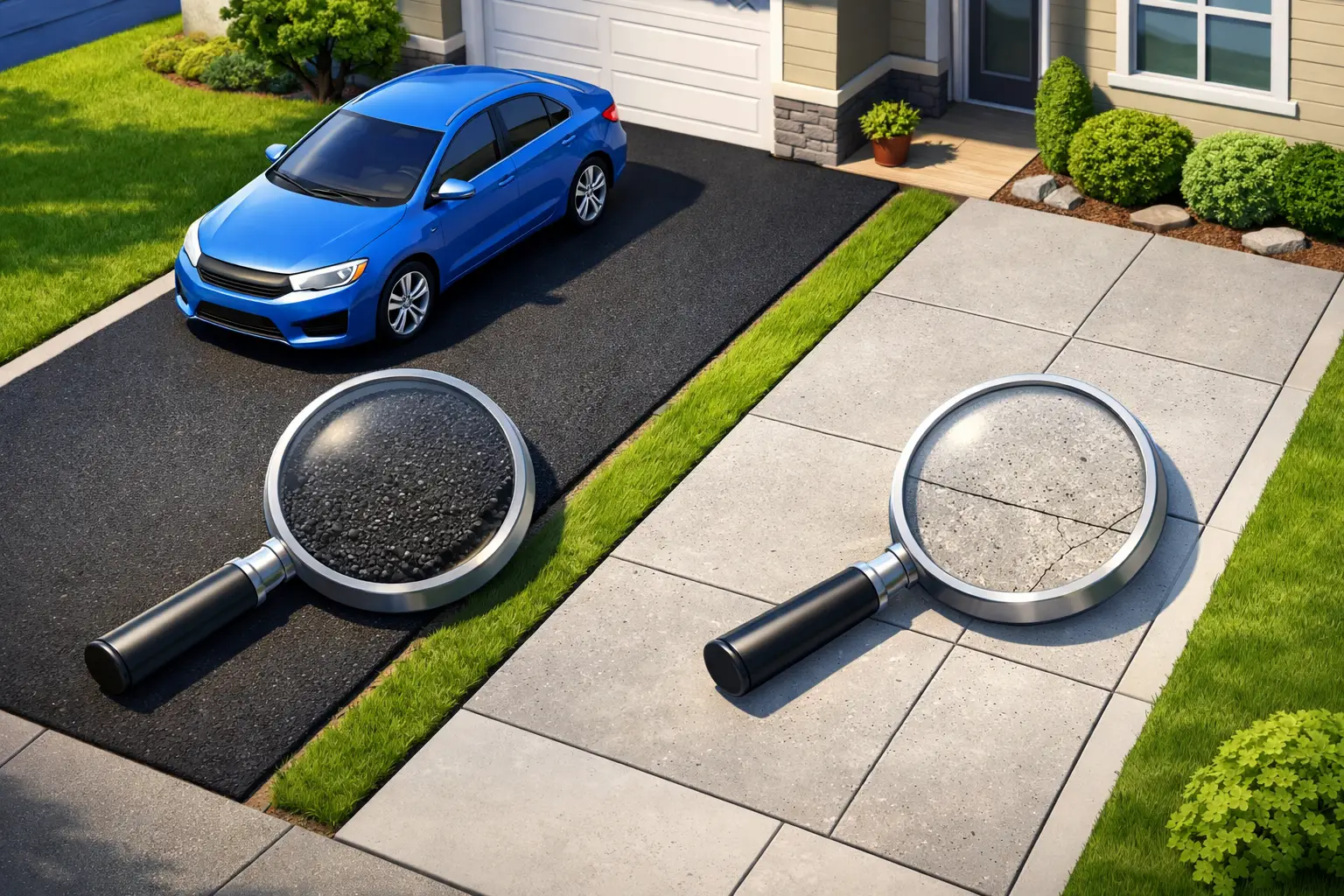
A cracked, faded driveway can make any property owner ask, is my driveway asphalt or concrete? The answer matters before you schedule repairs, apply sealer, or budget for replacement. Using the wrong product or repair method can waste money and leave the surface looking worse than before.
Fortunately, you usually do not need construction experience to tell the difference. A close look at the color, seams, edges, and crack pattern will often give you a clear answer.
Is My Driveway Asphalt or Concrete? Start With the Surface
Asphalt is a dark paving material made from stone aggregate held together with a petroleum-based binder. When it is new, asphalt is generally deep black. Over time, sun, rain, snow, and vehicle traffic cause it to fade to charcoal gray or even a lighter gray.
Concrete is a hard, cement-based slab. It is usually light gray, off-white, or tan, although stains, sealers, and age can change its appearance. Rather than looking like one continuous dark surface, concrete almost always has visible lines dividing it into sections.
The fastest visual clue is this: if your driveway is made up of large rectangular panels with straight grooves between them, it is probably concrete. If it looks like one broad, mostly continuous dark surface with a rough, pebbled texture, it is likely asphalt.
Look for Expansion Joints and Seams
Concrete needs room to expand and contract as temperatures change. For that reason, installers cut or form straight control joints across the driveway. These are the clean lines that create squares or rectangles in the slab. You may also see a flexible material in wider expansion joints near a garage, sidewalk, or foundation.
Asphalt does not normally have those evenly spaced panel joints. It may have seams where separate sections meet, especially on a wider driveway, but they tend to be less regular. Asphalt seams can appear as long, slightly raised or sunken lines rather than crisp grooves.
One exception is a driveway with a concrete apron and an asphalt main section. The apron is the portion closest to the street or garage entrance. This combination is common, so inspect more than one area before deciding what material covers the entire driveway.
Check the Color, Texture, and Edges
Asphalt has a darker, slightly flexible appearance. If you look closely, you may see small stones embedded in a black or gray binder. Its edges are often tapered down into the lawn, gravel, or soil, unless the driveway has concrete curbing or pavers along the sides.
Concrete has a lighter, more solid appearance. Its texture may be smooth, broom-finished, stamped, or exposed aggregate, but it still looks like a rigid slab. The edges are typically straighter and more defined than asphalt edges.
Do not rely on color alone. Older asphalt can fade enough to look gray, while concrete can darken from dirt, tire marks, mildew, or a colored coating. The presence of regular joints is usually the more dependable clue.
Use Crack Patterns as a Clue
The way a driveway cracks can tell you a lot about the material underneath your tires.
Asphalt often develops alligator cracking, which looks like a network of connected cracks that resembles reptile skin. It can also develop long cracks, edge cracking, dips, and potholes. Because asphalt has some flexibility, it tends to bend and weaken before it breaks apart completely.
Concrete cracks differently. You may see one or more longer cracks running across an entire panel, often starting from a corner or joint. A concrete slab can also heave, settle, or split into uneven sections. When this happens, one side of a crack may sit higher than the other, creating a noticeable trip hazard.
Small cracks do not automatically mean a driveway needs replacement. Asphalt cracks can often be filled and protected with sealcoating when the base is still stable. Concrete cracks may be repairable if the slab remains level, but widespread movement, crumbling edges, or multiple shifted panels can point to a larger problem below the surface.
A Few Simple Checks That Will Not Damage the Driveway
You do not need to chip away at your driveway to identify it. Start with a visual inspection in daylight, then look at an area near the edge where the material is easier to see.
On a hot summer day, asphalt may feel slightly softer than concrete, particularly in direct sun. It should not feel loose or sticky, but heavy vehicles, kickstands, or sharp objects can leave marks in weak or overheated asphalt. Concrete stays rigid in hot weather.
Water can offer another clue. A worn asphalt driveway may look very dark when wet and return to faded gray as it dries. Concrete generally remains lighter, although its pores can hold moisture and create darker patches.
Avoid testing the surface with a screwdriver, hammer, or sharp tool. Gouging a driveway just to identify it creates a small problem that can collect water and grow over time. A careful visual check is safer and usually more useful.
Why the Material Changes the Maintenance Plan
Asphalt and concrete need different care. This is where knowing the answer can save you from buying the wrong product or hiring the wrong type of repair.
Asphalt benefits from crack filling, patching, and periodic sealcoating. Sealcoating restores a darker finished look and helps protect the surface from moisture, sunlight, salt, oil, and everyday wear. It is not a fix for major base failure, deep potholes, or widespread alligator cracking, but it can extend the life of a sound driveway.
Concrete should not be treated with standard asphalt sealer. Concrete maintenance may involve cleaning, joint sealing, crack repair, resurfacing, or applying a concrete-specific sealer. If water is getting under a concrete slab and causing movement, the repair may require drainage work, leveling, or replacement of affected sections.
Long Island weather makes maintenance especially worthwhile. Freeze-thaw cycles allow water to enter small cracks, freeze, expand, and turn minor damage into a larger repair. Prompt attention is usually more affordable than waiting for a pothole, broken slab, or unsafe edge to develop.
What If the Driveway Has Been Covered Before?
Some driveways are not as straightforward as they first appear. An older concrete driveway may have been covered with an asphalt overlay. In that case, the top surface is asphalt, but movement or cracks in the concrete below can eventually show through.
You may also find asphalt patches on a concrete driveway, or concrete repairs along an asphalt edge. Different materials can be used around drainage areas, garage thresholds, walkways, and curbs. That does not necessarily mean the driveway was installed poorly. It simply means a repair plan needs to address each material correctly.
If you see straight concrete joints beneath a thin, cracked black layer, an asphalt overlay may be present. If you are considering a major repair or replacement, a paving professional can inspect the surface and base condition before recommending the best route.
When to Call for a Driveway Assessment
A photo can help identify a driveway, but an on-site look is better when there are drainage issues, soft spots, potholes, standing water, severe cracking, or uneven areas. These signs may involve more than the top layer. The foundation below the driveway has a major effect on how long any repair will last.
For homeowners, landlords, and property managers, the practical question is not only whether the driveway is asphalt or concrete. It is whether the current surface can be maintained affordably or whether the damage is pointing to a deeper issue. A straightforward estimate can clarify the condition, the repair options, and the expected work before a project begins.
Big Apple Paving and Remodeling helps Long Island property owners evaluate asphalt driveways, repair damaged areas, and plan paving work with clear communication and dependable scheduling. If you are unsure what you have, a professional assessment can prevent an expensive guess.
A driveway does not need to look perfect to be worth maintaining. But once cracks start holding water, edges begin crumbling, or the surface becomes unsafe, acting early gives you more repair options and more control over the cost.